The Letters of Eileen Chang - Part 3
The Chinese writer Eileen Chang (張愛玲, also known as Zhang Ai-ling) passed away in September, 1995. In 2004, Crown Press published a previously unknown novel of hers.
The title of the novel in Chinese is: 《同學少年都不賤》. There is presently no English translation even for the title. It is not easy to come up with a translation because the title is based upon a variation on a poem by Du Fu (杜甫):
《秋興》其三
千家山郭靜朝暉,日日江樓坐翠微。
信宿漁人還泛泛,清秋燕子故飛飛。
匡衡抗疏功名薄,劉向傳經心事違。
同學少年多不賤,五陵衣馬自輕肥。
The story plot revolved around the lives of two women who first knew each other in a secondary school run by missionaries in Shanghai, where they got along fantastically. After they got married, one of them went to Washington DC to become an interpreter while another took her daughter to live in France. They met again and they recalled the fun things in their past and they gossiped about whatever to their classmates. Then they parted ways again. That is the basic plot. Perhaps the novel could be simply titled <The Classmates> for simplicity.
When this previously unknown novel was published nine years after her death, there might been more discussions about the circumstances around the publication than about the literary merits of the novel itself.
According to the foreword written by the Crown Press editor, when professor Stephen C. Soong (宋淇) (who was the father of the blogger writing this essay) was alive, he had forwarded certain manuscripts and possessions of Eileen Chang to Crown Press for safekeeping. However, he did not mention to Crown Press that such a novel existed. In Eileen Chang's private will to Stephen C. Soong and his wife Mae Fong Soong, there was no mention of this novel either. After Stephen C. Soong passed away in 1996, Mae Fong Soong found the novel and forwarded it to the Crown Press office in Hong Kong. When the Crown Press office in Hong Kong mailed the original manuscript to the Crown Press headquarters in Taipei, the post office lost it! Fortunately, a photocopy had been made before the original manuscript was mailed as a precaution and that was how this novel came to be published eventually. The twisted history was enough to arouse suspicion among some people whether this was a forgery.
The history of the writing of this novel is unknown given the Eileen Chang and Stephen C. Soong are both deceased and Mae Fong Soong has no knowledge. But United Daily News Supplement editor Su Weizhen (蘇偉貞) pointed out that in Professor C.T. Hsia's collection of letters from Eileen Chang (see the monthly magazine United Literature, Volume 14, Issue 9), the letter from Eileen Chang dated August 20, 1978 mentioned this manuscript thus:
《同學少年都不賤》這部小說除了外界的阻力,我一寄出就發現它本身毛病很大,已經擱開了。
(in translation) Apart from the outside pressures on the novel <The Classmates 同學少年都不賤>, I also realized that it is seriously flawed right after I mailed it out. Therefore, it has been put aside.
This had been the sole primary reference so far on this matter.
The Eileen Chang specialist Chen Zishan (陳子善) wrote about the story around the publication of the novel (Wen Wei Po via Xinhua Net). The novel began with a mention of US Secretary of State Henry Kissinger, so Chen believed that it must have been written somewhere after 1973 (when Henry Kissinger became Secretary of State) and before 1978 (because the August 1978 letter to C.T. Hsia referred to the mailed manuscript).
Chen Zishan pointed out that there are two mysteries in the aforementioned quotation from the letter.
Mystery #1: What were those outside pressures?
Mystery #2: To whom was the manuscript mailed?
On mystery #1, there have been all sorts of speculations about the 'outside pressures.' But those are speculations and nothing more, because there is no primary evidence to support any of them. There is no point for me to repeat those speculations.
On mystery #2, Chen Zishan believed that it was obviously sent to Stephen C. Soong for his opinion. Chen wrote: "It is well known that since the 1950's, many of Eileen Chang's works were sent to Stephen C. Soong, who acted as the gatekeeper and arranged for them to be published. Perhaps Stephen C. Soong had a different view of this novel and believed that 'it is seriously flawed'? This may explain why the manuscript of this novel stayed in the hands of Stephen C. Soong. But this is just my bold hypothesis, and the relevant documentary evidence remains to be discovered."
Where in the world is that relevant documentary evidence going to come from? How about the archive of the correspondence between Eileen Chang and Stephen C. Soong/Mae Fong Soong? I happen to be in charge presently. The following information was discovered by me from a cursory scan of the archive.
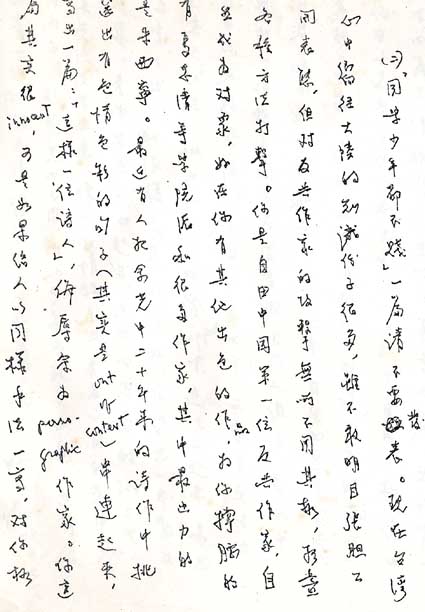
In a letter from Stephen C. Soong to Eileen Chang dated July 19, 1978 (or about one month before the aforementioned letter from Eileen Chang to C.T. Hsia):

[in translation]
Please do not publish <The Classmates 同學少年都不賤>. There are many intellectuals in Taiwan nowadays who adulate mainland China. They may not dare to express their positions openly, but they will do everything to attack anti-Communist writers by every possible means. You are the number one anti-Communist writer in Free China and you will naturally be the target. The good thing is that you have other excellent works and there are academic scholars such as C.T. Hsia as well as many writers (the most active one is Zhu Xining 朱西寧) who support you. Recently, someone went through all the sentences that have erotic overtones (and they are being taken out of context) from more than twenty years of Yu Guangzhong (余光中)'s poetry and connected them together for a piece entitled "A poet like this" in order to humiliate Yu as a "pornographic" writer. You are actually very innocent, but if people use the same methods against you, it will be very bad for you. At the same time, this novel is not much better than the previous two. After this gets published, it will be tough on your supporters. Recently, a magazine publicly criticized (Dick) McCarthy and said that the Iowa Writers Training Workshop students such as Yu Guangzhong (余光中), Bai Xianyong (白先勇), Wang Wenxing (王文興) and others were all CIA agents. Therefore, you should not mention McCarthy and the saga related to your novel Naked Earth.
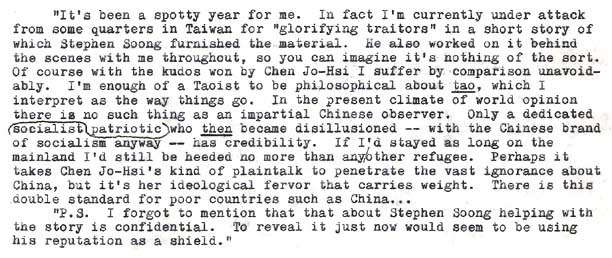
Dick McCarthy was the United States Information Service boss of Eileen Chang when she was doing translation in Hong Kong. He was also quite helpful to her over the years with recommendations and leads. Each Christmas, Eileen Chang wrote a letter to Dick McCarthy. The following was dated December 27 (either 1977 or 1978 -- Eileen Chang wrote down the month and day of each letter, but never the year!), and it was copied to Stephen C. Soong. This was typewritten by Eileen Chang herself.
The short story mentioned here is <Lust, Caution 《色,戒》>, currently being made into a movie by director Ang Lee of <Brokeback Mountain> fame and scheduled to be the opening film at the Venice Film Festival later this year. When that movie gets exhibited, there is bound to be yet another round of Internet condemnation about "glorifying traitors."
Did Eileen Chang and Stephen C. Soong sound paranoid about the 'outside pressures' coming from the Chinese Communists and their fellow travelers? In that context, you have to also remember that the novel <The Classmates 同學少年都不賤> contained references to Agnes Smedley, the first atomic bomb test in China, etc. That means nothing nowadays, but it meant a lot under martial law in Taiwan back then. Furthermore, it was also a different atmosphere and relationship among the writers of that era. One of the key figures at the time was Chen Jo-Hsi (also Chen Roxi) who grew up in Taiwan, studied in the United States, went to Nanjing (China) in 1966 and stayed seven years before leaving to write The Execution of Mayor Yin and Other Stories from the Great Proletarian Cultural Revolution to great critical acclaim (see review in TIME) as well as denunciation for betrayal to the cause of socialism. Chen Jo-shi managed to gain moral superiority because she spent seven years in China during the worst of times while her most vitriolic critics were armchair critics living comfortably in Taiwan, Hong Kong or the United States. In today's climate, <The Classmates 同學少年都不賤> actually seems quaint and outdated. But it is hard to say what the reaction would have been in 1978 given the prevailing atmosphere at the time. It is not fair for us to second-guess the judgments of Eileen Chang and Stephen C. Soong decades later.
As I said at the beginning, I only conducted a cursory search. The case could be made more solid if I can locate Eileen Chang's response to that letter from Stephen C. Soong. That may take some time to accomplish, but a good start has been made towards solving the mysteries listed by Chen Zishan.
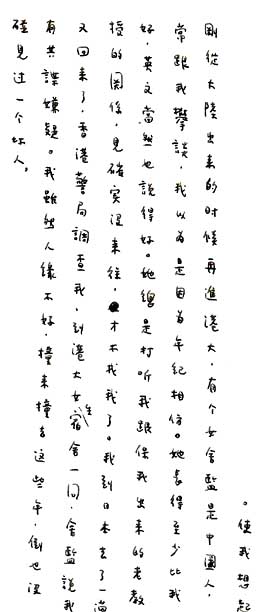
Here is another (undated) letter from Eileen Chang about an earlier experience in Hong Kong. It explains why some intellectuals may prefer to stay away from politics altogether.
[in translation]
This reminds me of the time when I just came back from mainland China and I went back to Hong Kong University. There was a female dormitory supervisor who was Chinese and who chatted with me often. I thought that it was because we were about the same age. She looked at least prettier than me and she obviously spoke better English. She kept probing me about my relation with the old professor who was my guarantor to come to Hong Kong. When she was certain that there was no connection, she dropped me.
Then I went for a trip to Japan and came back. The Hong Kong police ran an investigation on me and they went to ask questions about me at the Hong Kong University female student dormitory. The dormitory supervisor said that I was a suspected Communist spy. Although I did not get along with people and I have taken a bumpy road over the years, I have never met anyone like that.
关于《同学少年都不贱》 陈子善
2001年7月,盛夏时节,我从波士顿飞到洛杉矶。我是应美国南加州大学东亚系主任张错教授之请去作短暂访问的,在该系有一场小范围的学术演讲。但我此行还有一个更为重要的私人目的,那就是踏访张爱玲故居,寻找张爱玲当年在洛杉矶留下的足迹。
张爱玲1995年9月中秋节前夕在洛杉矶悄然告别人世,时光飞逝,倏忽六年过去了,张爱玲故居是否有新房客入住?故居前的几株绿树也该长高了吧?张爱玲常在寄信发传真的小店还在营业否?有关张爱玲的一切的一切,都是我亟想知道的。然而见到张错教授后,又得知南加大东方图书馆有“张爱玲资料特藏”,很值得一看。于是由张错教授热情引见,在东方图书馆负责人浦丽琳女士特别安排下,我查阅了尚未对外开放的“张爱玲资料特藏”。当打开四大纸盒特藏资料的一刹那,我简直不敢相信自己的眼睛。
事情必须追溯到四年之前。1997年10月,为纪念张爱玲逝世二周年,南加州大学东方图书馆举办了 “张爱玲遗作手稿特展”。“特展”取得了很大成功,原因之一就是得到了台湾皇冠出版社的鼎力支持,提供了不少张爱玲作品手稿复印件,包括英译《海上花列传》手稿、英文《少帅传奇》手稿(均为打字稿)、《对照记》和散文《乱世纪二三事》(即《惘然记》)、《“嗄?”?》、《草炉饼》、《笑纹》、《四十而不惑》、《一九八八至——?》手稿等等,琳琅满目,美不胜收。“特展”圆满结束后,这批手稿复印件就由南加大东方图书馆妥为保存。其中最为引人注目也最使我惊喜的就是中篇小说《同学少年都不贱》的手稿。
《同学少年都不贱》写在由皇冠出版社为张爱玲特制的500格长形稿纸上,共 42页,钢笔竖写,字迹娟秀清晰,一气呵成,仅少数几处有删改。亲眼目睹张爱玲这部当时尚不为人所知的中篇手泽,我不禁感慨万端。作家创作,不像GDP,可以每年持续增长,精神生产有巅峰期,也就有沉寂期,这本属正常,更无可厚非。但长期以来一直有一种论调,认为张爱玲离开大陆后,她的写作就走进了死胡同,乏善可陈。其实,留在大陆的那些二三十年代的文坛大家名家,又有几人在五十年代以后写出了足以传世的作品,那又该作何解释呢?事实恰恰与人们的苛评相反,后期张爱玲仍坚持创作,仍致力于有所突破,正像她在《续集》一书(1988年2月台湾皇冠出版社初版)自序中所说的,她在“继续写下去”,“虽然也并没有停止过,近年来写得少,刊出后经常有人没看见,以为我搁笔了。”
这部《同学少年都不贱》倒确实是张爱玲生前没有刊出的,个中原委,颇值探究。上个世纪七十年代中叶,是张爱玲小说创作的又一个喷发期,虽然已不像早年那么辉煌。她的好友宋淇(林以亮)在那篇写于1976年的名文《私语张爱玲》中就曾欣喜地透露“现在她又在专心创作,她的忠实读者和友好听见了这喜讯,辗转相告。”尽管宋淇预告的当时已在润饰的《小团圆》终于未能问世,《小团圆》手稿也至今下落不明,但两年之后,张爱玲还是拿出了《色,戒》、《浮花浪蕊》、《相见欢》等一系列新作。据张爱玲自己回忆,这几篇小说都在五十年代就已写出初稿,“此后屡经彻底改写”,才在1978年前后交付发表的。后来收入《惘然记》一书时又“还添改多处”,足见张爱玲创作态度的严谨,一丝不苟,也正应了她1978年8月20日致夏志清函中所作的自我解剖:“我是爱看人生,对文艺往往过苛。”
从《同学少年都不贱》开首就提到基辛格(张作季辛吉)出任美国国务卿,应可推算这部中篇作于1973年至1978年之间,也就在上引同一封致夏志清的长信中,张爱玲第一次也是唯一的一次提到这部本该与《色,戒》、《浮浪花蕊》等同时面世的《同学少年都不贱》,她告诉夏志清:“《同学少年都不贱》这部小说除了外界的阻力,我一写出就发现它本身毛病很大,已经搁开了。”所谓“外界的阻力”具体有何指涉?已引起“张学”研究者的浓厚兴趣。拙见既然这部小说当时根本不为外界所知,“外界的阻力”无非是广义的泛指,而不是明确的特指,即外界对张爱玲期待甚高,当然也可能包括《色,戒》1978年1月发表后所引起的争议,以至张爱玲后来不得不再写《羊毛出在羊身上——谈〈色,戒〉》以为答辩。而“寄出”又寄往何处?显然是寄给宋淇以听取他的意见。众所周知,五十年代以降,张爱玲不少作品都是寄给宋淇,过目把关安排刊登。如此说来,也许宋淇对这部中篇也有不同看法,认为小说“毛病很大”?这样也就能解释为什么这部中篇的手稿后来一直由宋淇保管。但这只是我的大胆推测,还有待相关文献的发掘证实。
不管怎样,《同学少年都不贱》袭用杜工部《秋兴八首》中“同学少年都不贱,五陵裘马自轻肥”之意,铺陈上海某所教会女中一个寝室四位女生尤其是赵珏和恩娟两位不同的生活经历和心理成长,以此揭示人生无常的沧桑悲凉,可谓别出心裁,意味深长。渗透小说的是张爱玲一贯的略带调侃的笔法,一贯的细腻入微的描绘,一贯的大起大落的时间跨度,一贯的前后呼应的情节结构。小说中对三四十年代教会女生性心理的露骨展示,对五六十年代海外知识分子人生选择的逼真刻画,在张爱玲以前的小说中都是从未出现过的。小说无疑带有某种程度的自传色彩,同时也巧妙地穿插了美国左派女记者史沫特莱、中国第一颗原子弹爆炸等情节,显示张爱玲力图开拓题材,在更广大的背景上反映风云变幻中小人物的日常生活,塑造女主人公的独特性格和命运,从而也就使小说具有了时代风尚史和心态史的意义。这应可视作张爱玲的可贵尝试。至于如何给这部中篇在张爱玲的小说创作史上恰当定位,读者自可见仁见智。
如果我的推测可以成立,宋淇当年收到《同学少年都不贱》后,又遵张爱玲之意“搁开 ”,这一搁就是整整二十六年!在张爱玲飘然西去之后,宋淇或者是邝文美先生及时检出这部中篇手稿寄交皇冠出版社(从南加州大学东方图书馆1997年10月 “特展”时就得到这部中篇手稿复印件,不难判断宋、邝夫妇是在1997年1月至1997年8、9月间把手稿转交皇冠的),使这部珍贵的手稿避免了可能散失的命运,这是值得大大庆幸的。
今年2月,为纪念建社五十周年,台湾皇冠出版社不失时机地推出《同学少年都不贱》繁体字单行本,紧接着大陆简体字本也将隆重登场。犹记三年前我自美国回国时,行囊中最为珍视的就是这部《同学少年都不贱》手稿复印件,这是承南加大东方图书馆的美意,特许我再复印的。三年来我常常翻阅这部手稿,哪怕就为欣赏张爱玲的钢笔书法,也是很难得的艺术享受。现在这部迄今为止唯一确凿无误的张爱玲佚作小说终于公之于世,对广大“张迷”和“张学”研究者而言,不啻是一个大好“喜讯”。我想读者一定会取不同的角度、从不同的层面、用不同的方法来解读《同学少年都不贱》,这是完全可以预期的,这也是张爱玲小说经久不衰的魅力所在。
《同學少年都不賤》:張愛玲遺作曝光 新京報 2004.02.17
本報訊 (記者趙晨鈺)昨天,台灣皇冠文化集團在其50周年社慶之際,宣布推出張愛玲的遺作《同學少年都不賤》,這本突然曝光的張愛玲著作據稱是張愛玲的最后一部遺稿。據悉,該書的中文簡體字版權也由天津人民出版社獲得,不久后中國內地的張迷們也可以讀到這本首次問世的張愛玲的作品。
《同學少年都不賤》的出版距1995年張愛玲在美國去世已經有8年時間。對於張迷們來說,這也許是個令人驚喜但卻有些不安的消息。因為許多人對這部遺作的真實性至今仍然存在著一些質疑。
其實,《同學少年都不賤》隻是一部僅有兩萬字未完成的小說。從出版社預先披露的內容看,這部小說仍然秉承著張愛玲一貫的文風,人物刻劃鮮明、情節鋪敘細膩,在輕快的故事節奏裡,透著對人生變化無常的滄桑淒涼感。小說寫了兩位女孩恩娟、趙玨之間的情誼滄桑。故事開始於兩人在上海重逢敘當年。恩娟嫁了位猶太人汴·李外,后來移民美國華盛頓,而趙玨則境遇不如恩娟。多年后重逢,兩人已經走上兩條完全不同的道路。和當年平等的身世一對照,高下立見。書名出自杜甫的《秋興八首》:“同學少年多不賤,五陵裘馬自輕肥。”已透著一股悲涼的味道。而這或許正是這部小說取名《同學少年都不賤》的深意。張愛玲研究專家、華東師范大學教授陳子善認為,這部小說在某種程度上帶有張愛玲自傳的性質,雖然目前看來似乎尚未寫完,但無疑具有重要的價值。
據悉,在張愛玲寫給私交甚好的學者夏志清的信中稱,她剛把《同學少年都不賤》寄給宋淇就發現它本身有很多毛病,所以就此擱置下來。這也解釋了為何該小說寫完后一直沒有出版的原因。但有消息稱,這部作品完成於何時、是否確為張愛玲所寫等都還存在疑問。但中國台灣方面已明確表示,有足夠的証據表明該作品的真實性。陳子善也告訴記者,他在2000年去美國訪問的時候就在美國一家大學圖書館見到了這部手稿的復印件,當時他很震驚,后得知這是該大學舉辦張愛玲手稿展覽向皇冠出版社征稿時得到的。這部手稿一氣呵成,張愛玲的字跡娟秀整齊,是一部很好的藝術品。這部作品出於張之手是不容置疑的。回國后他曾經和一些出版人講過此事,有人表示了濃厚的興趣,但因為版權問題而一直遲遲沒有結果。
為饗張迷,皇冠文化集團將《同學少年都不賤》與未收在《張愛玲全集》的四篇譯作《無頭騎士》、《愛默生的生平與著作》、《梭羅的生平與著作》、《海明威論》,以及她的兩篇散文《四十而不惑》、《一九八八至———?》,一起結集為《同學少年都不賤》出版,總計近八萬字。
曾交代不得面世 張愛玲《同學少年都不賤》出土 北京青年報 2004.02.18
張愛玲生前從未刊載的中篇小說《同學少年都不賤》日前出土。今年2月由台灣皇冠出版社出版,不日簡體中文版也將推出。
據了解,《同學少年都不賤》講的是兩位女孩恩娟、趙玨之間的情誼滄桑。故事開端於兩人在上海重逢敘當年。恩娟嫁了位猶太人汴·李外,后來移民美國華盛頓,汴·李外成為第一位入閣移民,趙玨則境遇不如恩娟。因是多年后重逢,兩人相對當年平等的身世,便見出高低。或者這正是取名《同學少年都不賤》的深意。言語間充滿張愛玲式一貫的譏誚,人物刻畫鮮明、情節鋪敘細膩,在輕快的故事節奏裡,透著對人生變化無常的滄桑淒涼感。
《同學少年都不賤》不屬於張愛玲生前交代的不得面世的作品,至於為什麼寫出后未發表?有關出版人士表示可能因張愛玲“創作上一向非常仔細和謹慎,不僅反復字斟句酌,甚至連一個標點符號都很考究,所以這篇小說對她而言或許還不算百分之百定稿。”根據張愛玲寫給夏志清的信披露,《同學少年都不賤》早在1978年即完成。 1978年前后可說是張愛玲發表新作及與台灣文壇交往最頻繁的時期。(陶瀾)
華夏經緯網 張愛玲唯一未發表遺作《同學少年都不賤》面世 2005.02.18
華夏經緯網2月18日訊:據中新網報道,迄今為止張愛玲唯一未發表的遺作《同學少年都不賤》將與張迷們見面,最快將於明天由台灣皇冠推出中文繁體字版。而簡體字版權尚未確定,據悉,天津人民出版社、南海出版公司等公司正在進行爭奪。
本人作品不容置疑
記者昨日電話採訪了張愛玲研究專家陳子善教授,他陳述了自己在美國目睹《同學少年都不賤》的經過。2000年,在洛杉磯南加州大學圖書館,陳子善見到了這部手稿的複印件,當時他很震驚,後經了解,這是因為要在張愛玲去世的地方舉辦她的手稿展覽,大學曾向皇冠出版社緊急求助之後所得。陳子善說,這部手稿一氣呵成,手稿上的字跡娟秀工整,這部作品出於張愛玲之手不容置疑。
遺作秉承一貫文風
據了解,該小說是一部僅有兩萬字的小中篇,從出版社預先披露的內容看,仍然秉承著張愛玲一貫的文風,人物刻畫鮮明、情節鋪敘細膩、故事節奏輕快。小說寫了上海一所教會學校一個寢室中的4位女生,畢業後各自走上不同的道路,故事以兩個女孩的生活為主軸,兩人在中學時期很是投緣,各自結婚後,一個到華盛頓當傳譯員,一個想帶女兒去法國生活,多年後幾人在上海重逢,分別後就斷了音訊。小說從重逢寫起,通過4個女生心理成長的過程,寫出了人生無常的滄桑悲哀。
書名出自杜甫的《秋興八首》之句:“同學少年多不賤,五陵裘馬自輕肥。”詩中悲涼的味道,或許正是這部小說取名《同學少年都不賤》的深意。
反證晚年確有力作
陳子善告訴記者,這部帶有張愛玲自傳性質的小說非常特別。張第一次將小說的背景放在美國,主人公是上世紀五六十年代到美國的華人。另外,遺作中關於性的描寫很大膽,出乎意料的大膽,這些在張愛玲生前的所有作品中非常少見。陳子善說,這部作品是對張愛玲晚年幾乎沒有力作的一個反證。
張愛玲遺作背景
對《同學少年都不賤》究竟何時寫成,寫成後為何遲遲未見出版,坊間流傳著眾多猜測。
張愛玲在寫給私交甚好的學者夏志清的信中說:《同學少年都不賤》這篇小說除了外界的阻力,我一發送也就發現它本身毛病很大,已經擱開了。
張愛玲寫道:出單行本事,我回復告訴宋淇,是因為我在寫小說上總極力為自己,但是儘管叫自己慢慢來,一方面擔心已發表的給人anthologize了去,也還是著急,所以釜底抽薪,想先出個單行本。現在當然已經打消此意。……我想我是愛看人生,而對文藝往往過苛。
據張愛玲寫給夏志清信來看,《同學少年都不賤》早在1978年即完成併發送,小說中有“在基辛格國務卿之前”的時間背景,可以確定是1973年基辛格擔任美國務卿後所寫。
1977年末,張愛玲為了《赤地之戀》的出版,與胡蘭成再度間接產生糾葛,故有推測這些大約就是信中所說的“外界阻力”。此外《同學少年都不賤》的篇幅尚不夠一本書字量,張愛玲擔心如發表,未經同意被收入別人所編選集。這也解釋了為何該小說寫完後一直沒有出版的原因。
來源:上海文匯報、記者:陳熙涵
張愛玲遺作《同學少年都不賤》曝光之四大疑點 2004.0.27
張愛玲(1920-1995),原名張瑛,生於上海。1942年開始職業寫作。上世紀40年代上海著名女作家。1952年赴香港。1966年定居美國,1995年逝世於公寓。主要作品有:散文集《流言》、散文小說合集《張看》、中短篇小說集《傳奇》、長篇小說《傾城之戀》、《秧歌》、《赤地之戀》。此次曝光的遺作《同學少年都不賤》應為她定居美國后所作,時間為1973-1978年之間。
2月16日,台灣皇冠文化集團在其50周年社慶之際,突然宣布推出張愛玲的遺作《同學少年都不賤》。據稱這是張愛玲的最后一部遺稿。據悉,該書的中文簡體字版權正在商洽中,很有可能是由天津人民出版社獲得,中國內地的張迷們不久將可以讀到這本首次問世的張愛玲的作品。
據悉,《同學少年都不賤》是一部僅有兩萬字未完成的小說。從出版社預先披露的內容看,這部小說仍然秉承著張愛玲一貫的文風,人物刻畫鮮明、情節鋪敘細膩,在輕快的故事節奏裡,透著對人生變化無常的滄桑淒涼感。書名出自杜甫的《秋興八首》:“同學少年多不賤,五陵裘馬自輕肥。”已透著一股悲涼的味道。而這或許正是這部小說取名《同學少年都不賤》的深意。張愛玲研究專家、華東師范大學教授陳子善認為,這部小說在某種程度上帶有張愛玲自傳的性質,雖然目前看來似乎尚未寫完,但無疑具有重要的價值。
據悉,在張愛玲1978年寫給私交甚好的學者夏志清的信中稱,她剛把《同學少年都不賤》寄給宋淇就發現它本身有很多毛病,所以就此擱置下來。這也解釋了為何該小說寫完后一直沒有出版的原因。但有消息稱,這部作品完成於何時、是否確為張愛玲所寫等都還存在疑問。但中國台灣方面已明確表示,有足夠的証據表明該作品的真實性。陳子善也告訴記者,他在2000年去美國訪問的時候就在美國一家大學圖書館見到了這部手稿的復印件,當時他很震驚,后得知這是該大學舉辦張愛玲手稿展覽向皇冠出版社征稿時得到的。這部手稿一氣呵成,張愛玲的字跡娟秀整齊,是一部很好的藝術品。這部作品出於張之手是不容置疑的。回國后他曾經和一些出版人講過此事,有人表示了濃厚的興趣,但因為版權問題而一直遲遲沒有結果。
皇冠文化集團將《同學少年都不賤》與未收在《張愛玲全集》的四篇譯作《無頭騎士》、《愛默生的生平與著作》、《梭羅的生平與著作》、《海明威論》,以及她的兩篇散文《四十而不惑》、《一九八八——?》,一起結集為《同學少年都不賤》出版,總計近八萬字。
◎故事梗概
小說寫了兩位女孩恩娟、趙玨之間的情誼滄桑。故事開始於兩人在上海重逢敘當年。恩娟嫁了位猶太人汴·李外,后來移民美國華盛頓,而趙玨則境遇不如恩娟。多年后重逢,兩人已經走上兩條完全不同的道路。和當年平等的身世一對照,高下立見。
專家評說:遺作價值何在
張愛玲遺作重見天日,其價值和意義究竟在哪裡?中國現代文學館副館長、現代文學研究專家吳福輝認為,因為張的文學成就很高,而其天才的爆發期又隻有短短的幾年,作品總數很有限,因此每次發現新作品,都會引起較大的讀者反映。
至於《同學少年都不賤》的價值,吳福輝表示自己沒有看到手稿,無法評價。但可以肯定的一點是,它對於豐富張愛玲作品的完整性,增進研究者對張愛玲思想和生平狀況的了解肯定是有價值的。其價值的大小將取決於這部作品是與其已知的作品相近,還是有變化。
陳子善是國內研究張愛玲的學者中較早看到該手稿的,他評價這是一部“很有意思”的作品。在記者的提問下,他對《同學少年都不賤》的價值做出了一些初步判斷。他認為,這部作品比較獨特,在張愛玲的眾多作品裡是能夠佔有一定位置的,尤其對於研究界會有較大的價值。
陳子善對《同學少年都不賤》作了幾點具體評述。首先,他認為這部作品作於上世紀70年代,足以說明張愛玲在晚年時期還在努力創作。其次,作品反映出當時張愛玲在努力開拓新的小說題材。該小說的時間跨度從上世紀30年代一直到70年代,地點跨越上海和美國,背景也涉及到當時較大的歷史事件,這在張以往的小說中是很少見的。第三點,陳子善認為這部作品的敘述角度比較特別。她寫的是教會女中同一宿舍的四個女生,她們的友誼和人生際遇,帶有張愛玲自傳的色彩。這樣的內容題材在張的小說裡也是罕見的。最后一點也是最值得關注的,即這部作品一反過去張愛玲作品的含蓄,在兩性性關系的描寫上較為大膽。它敘述了上世紀30年代上海年輕的教會學校女學生在一種封閉環境下性意識的萌發,反映了當時青年女性的心理狀態,甚至涉及同性戀等方面。這樣的內容即使在現代文學史上也是少見的。陳子善推測張愛玲多少應該是受到了當時美國的“性解放”思想的影響,所以有這樣的大膽突破。
對張愛玲遺作的四點質疑
近日張愛玲遺作《同學少年都不賤》的突然出現,對於廣大張迷來說無疑是一件歡欣鼓舞的事情,但在目前尚未見到簡體中文版的情況下,各方也存在著較多的質疑。
質疑1:是否確實為張愛玲遺稿?
張愛玲遺作事隔多年突然出現,這部遺稿在張愛玲生前從未有人聽說過,而且目前公諸於世的也隻有手稿的復印件。這難免會使人產生懷疑,如何証明這部作品確實是張愛玲的遺作?如果確為其遺作,為何要等到今天才出版?
對於真實性的問題,國內研究張愛玲的著名學者、華東師范大學教授陳子善表示,他已經完整地看過該遺稿復印件,確定是張愛玲作品無疑。理由有兩個方面,首先,陳子善研究過張愛玲的筆跡,他認為從手稿來看,確實為張愛玲的筆跡。當記者問及是否會有人模仿其字跡時,陳子善斷然否定。他表示,即使字跡可以模仿,模仿者也不可能有水平寫出這樣的作品。
陳子善還表示,另外一個非常明顯的証據就是,這件作品具有鮮明的張愛玲的文風,甚至在用詞、句式的習慣等細節方面,都完全是張愛玲式的。絕對沒有假冒的可能。
天津人民出版社此次極有可能獲得內地簡體字版的版權,負責此事的第三編輯部主任黎遙表示,出版社絕不會冒著出假作品的道德風險做沒有把握的事情。在爭取內地版權之前,天津人民出版社已經做了多方的考察和認証,確定其肯定為張愛玲作品無疑。
至於復印稿問題,據一些媒體披露,稱原件已在輾轉中遺失,隻有復印件幸好得到保存。皇冠方面暫時不願透露詳情,真實情況目前還不得而知。
質疑2:作於何時?為何現在出版?
關於這部小說的寫作時間,從小說中“在基辛格國務卿之前”的話基本可以判斷,該作品應是在1973年基辛格擔任美國國務卿之后所寫。同時從張愛玲1978年寫給夏志清的信可以判斷,《同學少年都不賤》應該在1978年就已完成。
二十多年前即已完成的作品,為何直到今天才露面?從張愛玲給夏志清的信中看出,她寫完后發現這部作品“本身毛病很大”所以擱置。而自1995年張愛玲去世后,台灣皇冠出版公司在1997年即獲得授權代理張愛玲的版權,這部遺稿當時是否已經為皇冠所獲得,又為何到今天才出版?
來自台灣方面的一個解釋是,遺稿之所以在今年發表,是為了慶祝皇冠建社50周年。每到周年大慶的時候,皇冠都會出版一些珍貴作品以志慶。但這種解釋顯然不能令人滿意。
質疑3:內地中文簡體字版會否發生版權糾紛?
張愛玲新的遺作的出現,帶來了另一個疑問。那就是其內地簡體字版的版權究竟應該由誰獲得,天津人民出版社是否能合法地擁有版權?
這一疑問的提出源於去年一場引起多方關注的張愛玲內地版權糾紛事件。2003年7月,哈爾濱出版社突然在報上發表聲明,聲稱它已經從台灣皇冠出版公司獲得《張愛玲作品集》的簡體字中文版權。該聲明稱:哈爾濱出版社擁有該系列作品中國內地的獨家專有出版權。其他任何出版社出版張愛玲任何作品的行為都屬侵權。據哈爾濱出版社稱,皇冠文化出版有限公司(台灣)將版權授予內地的一家文化公司,該公司現在又與哈爾濱出版社合作,哈爾濱出版社由此而獲得了版權。
那麼,《同學少年都不賤》這個新出現的遺稿,其內地版權是否也應該自然地屬於哈爾濱出版社?黎遙表示,確實存在一些小的遺留問題,但基本上不會產生版權糾紛,天津出版社獲得該書內地版權的可能性在99%以上。記者咨詢了廣州某大學法學系研究生劉波,據他分析,在皇冠與哈爾濱出版社簽訂的授權協議中,范圍應該隻包括已公開出版的張愛玲作品。根據這樣的推斷,《同學少年都不賤》應該不屬於哈爾濱出版社擁有版權的范圍。
記者未能與哈爾濱出版社的相關負責人取得聯系,但據代理《同學少年都不賤》內地版權事宜的相關人士透露,這次哈爾濱出版社並沒有主動要求出版這部作品,估計是因為皇冠這次沒有委托與哈爾濱出版社合作的圖書公司,而是找了另一家內地圖書公司處理此事的緣故。
質疑4:會否違背張愛玲生前意願?
另一個引起很多人關注的話題,就是出版該書會不會違背張愛玲的生前意願?1978年8月20日張愛玲在寫給私交甚好的學者夏志清的信中稱:“《同學少年都不賤》這篇小說除了外界的阻力,我一寄出也就發現它本身毛病很大,已經擱開了。”張愛玲自己感到不滿意,不願發表的作品,在作家身后是否應該將之公諸於眾?這樣做會不會違背其意願?
多數研究者都對此表達了否定態度。陳子善表示,這樣的情況在文學史上屢見不鮮。如海明威、魯迅等,都有生前未拿出來發表的作品,后人將其整理發表的情況。包括張愛玲自己也經歷過這樣的事情。她曾經覺得自己兒時的作品《霸王別姬》寫得不好,不願拿來發表。后來有人將其選入張愛玲全集進行發表,張愛玲也表示了默許。因此作家自己的心願究竟是什麼樣,也是很難判斷的事情。
另外,陳子善完整閱讀過該作品,他發現了作品在幾個方面對張愛玲自身的風格有突破,如題材上的突破,以及有較為大膽的性描寫等。因此,他猜測,張愛玲信中所說的“外界阻力” 很可能是指《同學少年都不賤》超出張的以往寫作風格而受到朋友的反對,張因此產生顧慮而將之擱置。如果這一猜測成立,那麼張愛玲對這一作品的認識很可能因為受到外界影響而不准確,其價值還需要由研究者們來判斷。
一隻粗糙的手的撫慰 ——略談《同學少年都不賤》 2004.04.05
我設想,《同學少年都不賤》(張愛玲著,天津人民出版社2004年3月版)如果由年輕的張愛玲來寫,也許要比現在兩萬字的篇幅長得多,而且要豐潤、流暢一些吧。四十年代一個二十幾歲女子的文學才華抑制不住地往外冒出來,三十多年后,經歷了那麼多一言難盡的亂離世事之后,才華還在,卻不是那麼重要了﹔文學呢,差不多成了欲說還休的形式。
年紀輕一點的張愛玲的讀者也許會有點失望?我卻不,因為從不豐滿、不流暢的敘述裡能夠讀到的內容,在早期才氣逼人的作品裡未必就有,特別是考慮到這部作品的“自傳性”——當然不是事實上的對應,而是從作品裡面透露出來的境遇、心態、精神等方方面面的信息——就非常有意思了。從這個意義上說,我一開始的那個設想根本就是錯的,那個年輕女子喜歡寫蒼涼故事,但她不可能預測自己后來的“離散”經驗,《同學少年都不賤》還是要到七十年代。
小說寫的人物,主要是趙玨和恩娟,起初還是上海一所教會中學的女生,那是丟了東三省的時代﹔到五六十年代,她們都在美國,一次趙玨看時代周刊寫一個入內閣的猶太人是從上海來的,又提到他的中國太太,正是恩娟,不免就想起過去的事:小說就從這裡開篇。
女子心細,還是心窄,不好說,即便是同寢室的好友,互相之間還是暗暗地比較,看似隨隨便便說個閑話,其實也藏著機鋒。她們都是非常敏感的人。張愛玲擅長的就是寫這樣的女子。在美國,趙玨比起恩娟,是大大地不如了,恩娟嫁對了人,跟著飛黃騰達﹔趙玨呢,常常不免窘迫,卻又敏感地自尊著。兩個人多年不見面,見一次面,趙玨發覺有三次恩娟不相信她的話,從感到刺耳到感到刺心,“人窮了就隨便說句話都要找鋪保。這還是她從小知己的朋友。”
恩娟的婚姻,趙玨其實是不怎麼羨慕,當初,還是早在上海的時候,她心裡的評價就是,“至少作為合伙營業,他們是最理想的一對。”趙玨自己,是絕不肯把愛情當作合伙營業的。在教會女校,沒有目的地愛著高兩班的赫素容,傍晚看見穹門外殷紅的天和鐘塔映在天上的剪影,“心漲大得快炸裂了,還在一陣陣的膨脹,擠得胸中透不過氣來,又像心頭有隻小銀匙在攪一盅煮化了的蓮子茶,又甜又濃。”赫素容畢業去北平上大學,給她來信,她狂喜地連看幾遍,漸漸明白是赫素容看她家裡有錢,借著救國的名義,好讓她捐錢給赫素容的某派學生組織。她連信都沒回﹔過了幾年,她和一個高麗人北京上海之間跑單幫,還是那樣,“我覺得感情不應當有目的,也不一定要有結果。”“完全是中世紀的浪漫主義。”到美國后,和萱望同居,又分居,又同居,直到萱望回歸大陸。
恩娟和趙玨見面的時候,說起她們同寢室的芷琪,她的遭遇不好,恩娟說著幾乎淚下。趙玨很是震動。后來她才明白為什麼當時“駭異”恩娟對芷琪一往情深。她想起戰后在兆豐公園碰見赫素容推著個嬰兒車,她完全漠然。固然早就有那封信使趙玨反感,但那與淡漠不同。這中間趙玨有了戀愛,與男子的戀愛。“與男子戀愛過了才沖洗得干干淨淨,一點痕跡都不留。”從這裡也可以推測,那時候教會女校流行的同性之間的感情,大都不是趙玨后來在美國感到沒有什麼好“駭異”的同性戀。
從自己的經驗推測,“難道恩娟一輩子都沒戀愛過?”“是的。她不是不忠於丈夫的人。”——令趙玨震動和駭異的,是這個。
在巨大的社會和個人的變化以及由此所帶來的頻繁的時空轉換中敘述人生世事,頭緒多而亂,而敘述主要從趙玨的視角展開,似乎就不能不是不充分、不流暢的。在困頓尷尬的夾縫裡慨往傷今,在漂浮不定的間隙中思前想后,是沒有辦法從從容容娓娓道來的,“離散”的生活還沒有給她提供從從容容整理人生經驗的機會,新的尷尬困頓,新的不定的漂浮,還會接踵而來。就此而言,這種點滴的、斷續的、不豐滿、不充沛、不酣暢的敘述本身,而不僅僅是這種敘述的內容,透露出小說人物的真實境況和精神狀態﹔這樣的狀態和境況,同時也可以勾連到小說作者的生存現實。夸張一點說,這個作品本身也就是從作者生存現實的夾縫和間隙中誕生的,它帶著那種生存現實的感慨和沉重。
但典型的張愛玲式的特色還保持著,譬如這一段短文字,寫趙玨招待恩娟吃飯的桌子及其擺設:“公寓有現成的家具,一張八角橡木桌倒是個古董,沉重的石瓶形獨腳柱,擦得黃澄澄的,隻是桌面有裂痕。趙玨不喜歡用桌布,放倒一隻大圓鏡子做桌面,大小正合式。正中鋪一窄條印花細麻布,芥末黃底子上印了隻橙紅的魚。萱望的煙灰盤子多,有一隻是個簡單的玻璃碟子,裝了水擱在鏡子上,水面浮著朵黃玫瑰。上午擺桌子的時候不禁想起鏡花水月。”在“鏡花水月”上吃飯,迷離虛幻得可以,又實在世俗得可以。
更典型的是,有一天趙玨從無線電裡聽到肯尼迪遇刺而亡的消息,她正在水槽上洗盤碗,腦子裡聽見自己的聲音在說:“肯尼迪死了。我還活著,即使不過在洗碗。”接下來的文字是,“是最原始的安慰。是一隻粗糙的手的撫慰,有點隔靴搔痒,覺都不覺得。但還是到心裡去,因為是真話。”
不僅典型如過去的文學表述,而且真實如現今流離生活的境況。這,也就是張愛玲了。
張愛玲別姬--評《同學少年都不賤》 趙為民 2004.04.08
即便是張愛玲也難是字字珠璣。考証價值之外,僅就文學成就而言,《同學少年都不賤》也不幸應了“強弩之末”那句老話
每一位成功的作家都當過楚霸王,縱橫文壇所向披靡。同時他們也難逃“別姬”的宿命,一旦靈感和氣力如虞姬般飄逝,他們也就陷入走投無路的絕境,隻剩下仰天長嘆、徒喚奈何了。所以,早就參透這一禪機的張愛玲高呼過:“出名要趁早啊!”她以前半生的輝煌証明著這個道理,又以后半生的淡泊反証了這個道理。
關於張愛玲神秘的后半生,外人一直知之甚少。現在終於有了《同學少年都不賤》,這篇被埋沒的舊作重見天日,不僅滿足了張迷們的閱讀渴望,更為我們打開了一扇眺望晚年張愛玲內心風景的窗口。
然而,即便是張愛玲也難是字字珠璣。考証價值之外,僅就文學成就而言,《同學少年都不賤》也不幸應了“強弩之末”那句老話。
一曰人老心軟。《同學少年都不賤》雖然遺傳了張愛玲作品一貫的語法、語感和語調,但在人物塑造和情節敘事上已經力度大失,不復有曹七巧時代的“心狠手辣”。經歷了滄桑世事之后,再緬懷既往,老作家張愛玲和當年的憤青張愛玲相比,多少有些心太軟。而這恰是職業寫作之大忌。
二曰力不從心。在我看來,《同學少年都不賤》與其說是一個精致的中篇,不如說是一個偉大的提綱。這樣的時間跨度、這樣的命運變遷、這樣的性格多樣性,其實更像一個長篇小說的梗概。不能完成這樣史詩性畫卷,而隻留下一份草稿,隻能說明晚年張愛玲的創作之“氣”已呈力不從心的疲態。這是令天下所有張迷都萬分遺憾的。
三曰靈光不再。拿《同學少年都不賤》和張愛玲全盛時期的作品相比,手法和招數並未大失水准,差的隻是那些靈光乍現的神來之筆———小則像《金鎖記》裡電影手法的運用,相信很多張迷都會背得出來:“風從窗子進來,對面挂著的回文雕漆長鏡被吹得搖搖晃晃,磕托磕托敲著牆。七巧雙手按住了鏡子。鏡子裡反映著翠竹帘和一幅金綠山水屏條依舊在風中來回蕩漾著,望久了,便有一種暈船的感覺。再定睛看時,翠竹帘已經褪色了,金綠山水換了一張丈夫的遺像,鏡子裡的也老了十年。”大則像《色戒》裡進退維谷的人生困境設置。靈感實在是寫作中的一種神秘現象,它來無預感,去無征兆,就像虞姬別霸王一樣。雖令作家扼腕長嘆,卻也力不能逮。
張愛玲給我的印象一直是一個有強烈精神潔癖的女人,所以我能理解她晚年因為有人追星翻她的垃圾而搬家。她不願意讓《同學少年都不賤》曝光天下,一定也是意識到了這部作品的問題。這也是這本書我看之前矛盾、看之后難過的原因———無論怎樣,總擺不脫一個窺私的從犯的干系了。我愧疚地想起她早期作品《霸王別姬》裡虞姬的遺言:“我比較喜歡那樣的收梢。”———張愛玲最完美的收梢一定是半個多世紀前的那個,眼下這樣的全民追星翻撿“垃圾”讓她地下不得安寧又無所遁逃。
陈子善新“张论”:《同学少年都不贱》——一代才女的封笔之作
2004年04月03日 01:25 深圳商报 “文化广场”周刊
在美国闯荡了十来年,张爱玲终于死了像林语堂那样立身扬名的这条心
1955年深秋,当张爱玲踏上新大陆的土地,她的心情,以拙意度之,应该是既忐忑不安,又踌躇满志的。来到一个完全陌生的国度,今后如何生存,尚在未知之数,说忐忑不安,也许不会错。说踌躇满志,因为对美国读者而言,EileenChang已不是无名之辈,她的长篇小说《秧歌》英文版刚在纽约出版,“好评潮涌”(林以亮《私语张爱玲》)。1955年4月3日的《纽约时报》就有书评赞誉《秧歌》为“极佳的精短的长篇小说”。据美国学者高全之的统计,1955年美国报刊推介《秧歌》的书评就有9篇之多。所以,张爱玲远渡重洋来到美国,不能说没有想以英文创作在西方世界闯荡出一片新天地的打算。
开始情况确实不错。张爱玲先后进入爱德华、麦克道威尔基金会文艺营、亨廷顿·哈特曼基金会文艺营等从事英文写作,英文短篇小说StaleMates(即《五四遗事》)也得以及时发表。同时结识了美国左翼剧作家赖雅(F.Reyher)并共结连理。可惜好景不长。英文长篇小说PinkTears(《粉泪》)是她化费不少心血写成的,却未能接受出版,张爱玲企图在美国文坛进一步确立地位的计划初次受挫。
跨入六十年代之后,张爱玲转向大学发展,先后担任迈阿密大学驻校作家、剑桥瑞克利夫研究院研究员和加州柏克莱大学中国研究中心高级研究员,开始了《海上花列传》的英译工作。然而,以张爱玲的独特个性和对人接物的与众不同,结局都很不愉快。自1967年在英国出版英文长篇小说TheRoageoftheNorth(即《怨女》)之后,张爱玲基本上停止了英文创作。她终于明白她的努力是白费了,她后来创作的英文文学作品无法赢得英文读者的青睐。
于是,张爱玲死了在美国文坛像林语堂那样立身扬名这条心,重又回到中文创作上来。虽然她从未完全中断中文写作,如她曾为香港的电影公司撰写过多部电影文学剧本,但这毕竟更多的出于稻梁谋的考虑,用她自己的话说就是“为了实际的打算”,与严肃的文学创作是有所不同的。
《同学少年都不贱》奇迹般“出土”
张爱玲主要是从两个方面重返中文文坛的。一方面是《红楼梦》研究,成果就是那部1977年在台湾出版的令“红学家”都击节叹赏的奇特的《红楼梦魇》,另一方面就是重操“旧业”,恢复小说创作。1974年6月9日,张爱玲写信告诉夏志清:“前些时写了两个短篇小说,搁下来让它多marinate些时,先写一个很长的中篇或是短的长篇。”一年以后,到了1975年7月19日,张爱玲在致夏志清信中进一步透露:“我这一向一直在忙着写一个长篇小说《小团圆》,写了一半。”这是张爱玲首次提到这部至今仍令广大“张迷”无限惆怅的《小团圆》,同时也让我们知道了她这一时期已逐渐进入状态,交替着创作中文中短篇和长篇。
对于《小团圆》,张爱玲后来在致夏志清信中有更具体的交代。全书长达18万字,且初稿已经杀青,应该是张爱玲后期最重要的一部力作。但她1976年4月4日致夏志清信中却表示:“我在euphoria过去之后发现《小团圆》牵涉太广,许多地方有妨碍,需要加工,活用事实。请代soft-pedal根据事实这一点。”何谓“牵涉太广”?为什么“许多地方有妨碍”?原来《小团圆》“是根据她同胡兰成这段恩怨故事而加以改编的” (夏志清转引张爱玲另一好友庄信正语),这当然会“牵涉太广”,而且颇为敏感,不是胡兰成的《今生今世》在台湾出版已引起轩然大波了吗?以至她对已完成的初稿顾虑重重,觉得“需要改写,相当麻烦”(1977年6月29日致夏志清函)。这一搁下,就遥遥无期了,直至张爱玲弃世,《小团圆》仍未改好,永远无法改好了,初稿手稿也下落不明,至今仍是个谜。
这就是《同学少年都不贱》(以下简称《同学》)的写作背景。《小团圆》虽然中途突然叫停,却催生了其他中短篇小说的面世,包括《色戒》,包括《浮花浪蕊》,包括《相见欢》,也包括了这部日前奇迹般“出土”的《同学》。1978年8月20 日,张爱玲在致夏志清的长信中首次也是惟一的一次提到《同学》,已为论者广泛引用,不妨再征引一次:“《同学少年都不贱》这篇小说除了外界的阻力,我一寄出也就发现它本身毛病很大,已经搁开了。”其实信中还有一段话同样值得注意:“《浮花浪蕊》一次刊完,没有后文了。里面是有好些自传性材料,所以女主角脾气很象我。长久不写,总是cramped,放不开来。”这段话完全可拿来作为《同学》为什么“搁下”的一个诠脚。
小说再一次展示了张爱玲式的无尽的“苍凉”
《同学》也有“好些自传性材料”,“女主角脾气”也很象张爱玲,这是不言而喻的。小说里某教会女校明显有着张爱玲中学母校圣玛利亚女校的影子,甚至对校区景物的生动描写也与圣玛利亚女校十分相似。小说中赵珏、思娟等四位同寝室女性当年的日常生活,喜怒哀乐,对“性”的好奇,对“情”的似懂未懂,也不难从张爱玲中学同学的“自白”(1937年圣玛利亚女校校刊《凤藻》中曾有有趣的记载)中找到相近的答案。正是《小团圆》追摹了张爱玲“熟知的真情实事”(夏志清语),才打开了她记忆的闸门,中学时代的生活一一重现眼前,加上她来到美国之后的种种不如意,经过艺术加工,剪裁渲染,成就了这部别具一格的《同学》。
说《同学》“自传色彩”浓厚,还不限于对中学生活的描绘。小说后半部分有一处重要细节,说的是赵珏在华盛顿为了参加美国国务院对韩招待会,自己裁剪衣服,而且十分得体,颇有风韵。如果联系张爱玲早期名作《更衣记》,如果联系张爱玲早年那些令人“惊艳”的奇装异服照片,我们就能明了张爱玲对女性服饰素有研究,别出心裁的裁改服装正是张爱玲的“最爱”。与女性服饰密切相关,也正是张爱玲小说的一大特色,在她的名作《金锁记》、《倾城之恋》中已有淋漓尽致的发挥,在《同学》中又一次出现了,主人公的处境和复杂心情透过服装裁改这一并不显眼的细节得到了巧妙的烘托。
张爱玲以往的小说大都取材于她再熟悉不过的没落的封建大家庭,《同学》都是她自己大半生的某种写照,至少有着她本人生活经历的若干投影。小说中赵珏的不甘受人摆布(如赫素容),不甘寄人篱下(如恩娟),不甘违心盲从(如董望),不甘有性无情(如司徒华),或多或少折射了张爱玲本人的生活,尤其是后期的生活。“人穷了就随便说句话都要找铺保”,真是痛心疾首之言,又何尝不是张爱玲后期心境的曲折反映?随着小说情节逐渐展开,赵珏与恩娟之间,恩娟三次不想信赵珏的话,无疑象征着两人关系的渐行渐远,也再一次展示了张爱玲式的无尽的“苍凉”。
就小说技巧层面而言,《同学》从《时代周刊》始,又以《时代周刊》止,首尾呼应,匠心独运。整部小说张爱玲式的语汇比比皆是:女人、上海、好莱坞电影、精美点心之类。张爱玲小说中最为人称道的 “镜花水月”意象(从处女作《不幸的她》就已开始,而且一以贯之)也在赵珏与恩娟最后一次见面时意味深长的出现了,而且描写细腻、颇为精彩。当然,小说也有不少新的添加剂:同性恋、乳房、性……,以至有论者对此有所批评。不过,假如把小说所描写的年代联系起来加以考察,应该是不难理解的。三十年代不是丁玲、郁达夫、巴金等作家都不同程度的写过同性恋吗?张爱玲描写“乳房”也不是第一次了,《倾城之恋》中就有独到的描绘。
“同学少年都不贱”,杜工部《秋兴八首》中的原诗应该是“同学少年多不贱,五陵衣马自轻肥”。从“多”到“都”,一字之改,张爱玲也许是记误(这是很可能的),也许是另有用意。不管怎样,这部《同学》的寓意是较为丰富深刻的,可以作多层面的解读。不少论者对《同学》在张爱玲小说创作史上到底占有怎样的地位十分关注,暂且不必骤下结论,何况撰写《同学》时,张爱玲并未调整到最佳创作状态也是不争的事实,她不是已经承认“长久不写,总是cramped,放不开来” 吗?然而,说《同学》是张爱玲后期的一部重要创作,应该是没有疑义的。八十年代以后,张爱玲除了修改象《小艾》这些的旧作,她的小说创作真的是中止了,一代才女不得不停止她的天才的歌唱。因此,从某种意义讲,《同学》也可看作张爱玲小说创作的封笔之作,其价值也就更不同寻常,耐人寻味了。
◎陈子善
忍看红颜老去
2004年04月03日 01:25 深圳商报
看红颜老去,无论如何都是一件让人伤感的事。看过最近书市上热闹的张爱玲的《同学少年都不贱》,又是失落又是后悔:尽管明白所有的邂逅带来的并都不是惊喜,但这次所遭遇的失望却有点出乎意料。
本来,这部张爱玲生前没有刊出的作品重见天日,对出版界来说总是件好事;对研究现代文学史和作家创作历程的人来说,也是一笔丰富的资料,犹堪期待;但对张迷而言,实在应该算是一种惨忍。一部短短的中篇小说,我在阅读的过程中几次停下来,几次翻回到封面上看大大的四个字“张爱玲著”,又读序言、又验看小说手稿,仍难真的相信这是张爱玲的作品。
平心而论,这篇小说无论是故事架构还是语言风格,仍隐约有张爱玲的影子在,但风骨和精髓却荡然无存。以往精灵般穿梭走动的人物在这里像是以速写勾勒出来的扁平的印记,无论赵珏还是恩娟都模糊得像搁置多年开始褪色的水墨画,只是斑驳的印痕,神韵俱失。最着恼的是张爱玲小说中一向有的犀利、爽脆和细碎,也像水银泻地般无迹可寻。原有的俏皮和幽默分明很打了折扣,不有趣,反倒生涩得让人不舒服。这时候,《倾城之恋》里的白流苏、《金锁记》里的七巧、《红玫瑰白玫瑰》里的娇蕊和烟鹂都会不自觉地从记忆中跳出来,好像有意显示着张爱玲曾经的活力。
张爱玲在文坛上最风光的时候是在二十三四岁,《同学少年都不贱》是张爱玲58岁时创作的一批小说中被她自己否定的一篇。她自己的感觉是:“我一寄出也就发现它本身毛病很大,已经搁开了。”这一搁就是26年。被作家搁置的作品总是自己感觉不成熟,不想拿出手的东西,像普鲁斯特的《追忆逝水年华》只算是文学史上仅有的意外。但以张爱玲的清醒,这应该是一个客观而明确的自我判定。没想到现在大白于天下,而且有评家以此证明去国后已届年迈的张爱玲,创作力依然旺盛。更有的宣传词以“同性恋”的噱头来炒作。其实,张爱玲在小说和散文中流露出来的浓郁的“女女情结”早就受到评论家以及张迷们的关注,并不新鲜。如果就女性的友谊和题材论,反倒是看散文《炎樱语录》、《我看苏青》、《姑姑语录》来得分明;如果因为作者在书中明确提到了“同性恋”字样而声张其势的话,则是陷入了“字词障”,而冲着这些宣传词买书的读者,只怕免不了有掉入陷阱的失望。
还有一种说法提到这篇小说中的“自传色彩”,这一点多少还有些说道。先是三四十年代教会学校女生的生活,再加上五六十年代海外知识分子的生存现状,都与张爱玲的生平际遇相吻合。以此为线索看书中的赵珏,订做不起夜礼服、买廉价的鞋子,穿旧衣服改的大衣,看到恩娟后感叹:“名牌服装就是这样,通体熨贴,毫不使人觉得这颜色四五十岁的人穿着是否太娇了。看看也至多三十几岁。”又恍见张爱玲现身说法。
我们知道成名很早的张爱玲在国内的穿着一向以新奇怪异著称,她穿了自己设计的对襟的衣服去印刷厂时,曾引得工人们围拢来看她。她说过:“再没有心肝的女子,说起去年那件织绵缎夹袍的时候也是一往情深的。”但在她离世后,皇冠出版社为她举办的遗物展里,她的衣服是粗俗的,并不好。一个有严重“恋衣癖”的人能让自己的衣服马虎到这个地步,不难想见她晚年生活的窘困。
其实一向在小说里包裹自己,在散文里又把自己的生活剖白的一清二楚的张爱玲的生活并没有太多的秘密可以隐藏,我们看她的散文,从她的抓周、背唐诗、父母的离异、与继母的口角、被关起来的绝望,都可以在文章里读得一清二楚。她的第一次婚姻也因为胡兰成那本《今生今世》,起承转合清清楚楚。但张爱玲出国后的遭遇却一向鲜见,直到她独自老死异乡,这一段生活读者是陌生的,很少有机会再听到她剖白自己。但在她去世后,无论在出版界还是影视圈,其热度一直持续高烧不退,影视剧一改再改,今年香港更是直接上演了话剧版的《张爱玲传》,假设她一直留在国内,替她“可能”了另一个版本的人生。这种热,与张爱玲晚年的冷,成了有意思的对比。在这热的下面,也许我们可以从《同学少年都不贱》里,“窥视”到张爱玲晚年冷的蛛丝马迹。而且,在我看来,这种冷不仅仅指她的生活起居,还包括她的创作力。而创作力的“冷”更让我们感受到岁月的无情。
张爱玲有句话被引用过无数次,她说:“生命是一袭华美的袍子,上面爬满了蚤子。”如果你做好了看到蚤子而不惊慌的准备,那么就可以毫无顾忌地去揭开这袭华美的袍子。
◎尚珂
東方網3月13日消息:今天是張愛玲遺作《同學少年都不賤》簡體字版在內地亮相上市的日子。著名張學研究專家陳子善教授,在上海書城二樓的首發式上回答眾多張迷的疑問,講述這部遺作背後鮮為人知的故事。
為什麼不可能是偽作?
張愛玲遺作事隔多年突然出現,並且在張愛玲生前從未有人聽説過,而且目前公諸於世的也只有手稿的複印件。這難免會使人産生懷疑。
陳子善説,其實早在2001年訪問美國時,在南加州大學東方圖書館“張愛玲資料特藏”中,他就有幸讀到這部少有人知的作品,並且是手跡的複印件。當時他很震驚,後得知這是該大學向皇冠出版社徵稿時得來。陳子善研究過張愛玲的字跡,在這部手稿上,張愛玲的字跡娟秀整齊,絕對沒有偽造的可能。
另外一個非常明顯的證據就是,從《同學少年都不賤》的文風來看,也可以肯定出自張愛玲的手筆。文章的句式、筆調、題材,甚至是對外國姓名的翻譯,一如張式風格。世上模倣張愛玲文風的人很多,但要所有細節都能符合張式文風,那幾乎是不可能的。
為什麼生前不發表?
1978年8月20日張愛玲在寫給私交甚好的學者夏志清的信中稱:“《同學少年都不賤》這篇小説除了外界的阻力,我一寄出也就發現它本身毛病很大,已經擱開了。”張愛玲究竟為何自己感到不滿意?
陳子善認為,既然這部小説當時根本不為外界所知,“外界的阻力”無非是廣義的泛指,而不是明確的指向,即外界對張愛玲期待甚高,當然也可能包括《色,戒》1978年1月發表後,所引起的爭議,以至張愛玲後來不得不再寫《羊毛出在羊身上———談〈色,戒〉》為答辯。“張愛玲擔心人們對《色,戒》一書的看法,可能會波及對這部小説的看法,以至有所猶豫。”
這從她給夏志清的信中也可見一斑:“我已打消此意(指發行《同學少年都不賤》一書單行本),我想我是愛看人生,而對文藝往往過苛。”
為什麼有必要價值重估?
張愛玲自己的不滿意,並不能否認這部作品的價值。陳子善説,《同學少年都不賤》可以考證得出大概作于上世紀70年代,足以説明張愛玲在晚年時期還在努力創作,努力開拓新的小説題材。小説的時間跨度從上世紀30年代一直到70年代,地點跨越上海和美國,背景也涉及到當時較大的歷史事件,這在張以往的小説中是很少見的。
陳子善還認為這部作品的敘述角度比較特別。她寫的是教會女中同一宿捨得四個女生,她們的友誼和人生際遇,帶有張愛玲自傳的色彩。這樣的內容題材在張的小説裏也是罕見的。最後一點也是最值得關注的,即這部作品一反過去張愛玲作品的含蓄,在兩性性關係的描寫上較為大膽。它敘述了上世紀30年代上海年輕的教會學校女學生在一種封閉環境下性意識的萌發,反映了當時青年女性的心理狀態,甚至涉及同性戀等方面。這樣的內容即使在現代文學史上也是少見的。
陳子善推測張愛玲多少應該是受到了當時美國的“性解放”思想的影響,所以有這樣的大膽突破。而且很有可能就是因為這樣的“突破”超出張的以往寫作風格而受到朋友的反對,張因此産生顧慮而將之擱置。如果這一猜測成立,那麼張愛玲對這一作品的認識很可能因為受到外界影響而不準確,其價值還需要由研究者們來重新判斷。
2007-12-12 12:30:13
【讀書】從海明威的冰山理論,評張愛玲的同學少年都不賤。 2012.02.28
本文內容來自2012年2月17日廣播《News98張大春泡新聞‧Joyce時間》 有幸經書迷錄製留存,聽到後簡直如獲至寶。評論與挖掘張愛玲的人太多了, 但很少有人像張大春和Joyce這般令我由衷感到喜愛、不是賣弄自己也一知半解的理論拗口分析、也不需引用張愛玲的句子來擴充版面、讓人徒感『張腔濫調』。他們用淺白的口吻聊張愛玲,帶你看懂她兩行間沒寫出來的那一行內心曲折,或許張愛玲不是他們最喜歡的作家,但能讀出這深度,也堪稱知音了。Joyce名為顏擇雅,不定期隔個幾週來張大春的廣播說書,非常有趣。她之前也聊過小團圓,觀點甚是令人驚豔(該集摘要請看美杜莎這篇)因為自己講張愛玲實在是講不出個所以然,只能借花獻佛,把整段節目內容紀錄整理,也當作對偶像兼心靈支柱的祖師奶奶致敬,()裡寫的則是我忍不住插嘴的。附帶一提,去年很紅的電視劇犀利人妻,最終回隋棠說的那句:回不去了!原創正是來自張愛玲的半生緣;然後那篇被大量轉貼的『張愛玲寫給女人的49句話』根本不是她寫的,她沒說過!請不要再以訛傳訛誣衊張愛玲了!
顏擇雅(以下簡稱顏):這次要介紹一篇已經出版一陣子,但我覺得一直被忽略的作品,就是張愛玲的『同學少年都不賤』。
張大春(以下簡稱張):欸?張愛玲還有被忽略的時候嗎?(笑)
顏:我相信很多覺得自己很理解張愛玲的人,可能都沒看這篇小說。先說說我為什麼要講這個題目,我記得一兩個月前我在這節目有談過、為什麼有些作家年輕時創造力很豐盛、但後來就不寫了(註)當時我三番兩次以張愛玲為例,我記得我舉的最後一個理由是,張愛玲晚年選了一個讓她寫起來很辛苦的風格,所以她就寫不太出來、寫得非常慢、或說對自己非常挑剔。我所謂她晚年才新嘗試的寫作風格,就是海明威的冰山理論。當然我現在對張愛玲的各種學術評論、並沒有跟得這麼緊,但至少我搜尋後發現,從來沒有人提過張愛玲如何受到海明威冰山理論的影響。所以我今天要趁這機會來講,我認為張愛玲作品裡受海明威影響最大的,就是這篇『同學少年都不賤』。我先介紹一下這篇小說的出版歷程!張愛玲是1995年過世,她過世後也沒人提過有這篇小說,反而是小團圓被提了好幾次。2004年、就是張愛玲過世後9年,這篇小說突然出來了,當時皇冠特別交代,他們也很驚訝怎麼會跑出這篇小說,後來才找到在1978年8月,張愛玲曾在寫給夏志清的一封信裡提到這篇小說。張愛玲自己說沒發表的原因,是因為她寄給林以亮之後,發現這小說本身毛病很大,所以就擱開了。1978年8月這是一個很重要的線索。我們知道張愛玲被夏志清重新挖掘、抱得大名後,她總共只出版過三篇短篇:色,戒、浮花浪蕊、相見歡,這三篇都是1978年發表的。她特別說這三篇她都蘊釀了30年,選擇在1978年一口氣發表!照理說『同學少年都不賤』應該要跟這三篇同時發表,可是張愛玲覺得不滿意,所以壓下來了。這可能是『同學少年都不賤』出版後、並沒有激起讀書界大反響的原因,因為張愛玲自己覺得有瑕疵、不滿意。看小團圓至少可以對號入座、對照胡蘭成寫的(註:民國女子)讓小團圓造成聳動、相較之下『同學少年都不賤』就沒造成同樣的效應。其實我自己看這作品時,我很驚訝!因為張愛玲在50年代翻譯過海明威的作品和相關評論文章,我看過其他受海明威冰山理論影響的作品,但從來沒有一篇像『同學少年都不賤』那麼明顯的受海明威影響。
張愛玲在1978年發表的那三篇短篇,已經跟早期作品很不一樣了。要知道張愛玲的世界觀,年紀輕輕二十出頭就已經非常世故非常蒼涼,所以晚期能和早期有甚麼不一樣?總不能更世故更蒼涼吧。她晚期作品,像是色,戒、浮花浪蕊、相見歡,還有小團圓,我們發現她是徹底的客觀寫實。所謂客觀寫實就是作者只能呈現,而且呈現的是誰的觀點,也要清清楚楚。她可以寫角色的內心世界、但作者本身不能跳進小說裡跟讀者說:我要跟妳講的是甚麼故事。張愛玲早期的小說,很多地方不客觀不寫實、她是常常跳進來說話的。
張:她大部分的小說都是跳進來的。
顏:沒錯!我知道很多人沒那麼喜歡張愛玲晚期的作品。只喜歡早期的、像金鎖記、傾城之戀裡面那些很優美、很形象化的句子。張愛玲在50年代傳奇再版的時候曾說:這些故事都很好、是被我寫壞了。事實上張愛玲30歲時,對自己20歲的作品是很不滿意的。如果以她60歲的標準,她早期那些作品可能也都不能出版了。我認為她不滿意的,可能就是讀者最喜歡的那些優美句子。
張:那些很形象化、很鮮明、又很準確的比喻!
顏:很準確是沒錯,但那是說故事的人高高在上,去跟讀者說我要跟妳講的是甚麼故事。這就不客觀不寫實。並非不客觀不寫實的小說就不偉大。我舉例說,托爾斯泰也常在他的小說裡不客觀不寫實:幸福的家庭都是一樣的,不幸的家庭各有各的不幸。很有名的『安娜‧卡列尼娜』的開頭,就是個很主觀的句子、也是作者開頭就跟你說我要講的是甚麼故事。
可是在張愛玲早期小說的不客觀不寫實,有些地方是真的破壞小說的完整性。而且那些句子也都美得不得了。我舉個例:在金鎖記裡面,整篇最有名最優美的一段,就是曹七巧最愛的男人(她的小叔季澤)來勸她賣田產,七巧拒絕他之後、站在樓上看著季澤離去的身影:長衫搭在臂上,晴天的風像一群白鴿子鑽進他的紡綢長袴褂裡去、哪兒都鑽到了,飄飄拍著翅子。那是個非常優美的句子,可是以客觀寫實的標準來說,曹七巧怎麼可能有這種心靈程度,可以想到接近唐詩宋詞、這種李清照等級的意象、來描述自己的心境呢?我認為張愛玲在寫的當時可能也知道自己有這個問題。
張:這種作家不能自已的狀況,托爾斯泰曾經形容過,像他小時候在一個大到可以練兵的大廳裡騎腳踏車,一個女生在旁邊念書,照理說他不可能撞到那女生,但他沒辦法、騎著騎著就撞上那個女生……
顏:這叫下筆不能自休!寫出其實不應該寫的東西。
張:所有紀律上不容許的,都在寫作實際的召喚下不能不寫到!
顏:我再舉個例子。紅玫瑰白玫瑰有很多有名的句子,蚊子血啦、飯黏子啦,可是中間有段也是明顯破壞。男主角佟振保自己一個人在陽台上看到別人很幸福的模樣:風吹著的兩片落葉踏啦踏啦彷彿沒人穿的破鞋,自己走上一程子(破鞋算是反面褒喻在女人堆中尋覓的振保)......這世界上那麼許多人,可是他們不能陪著你回家。這個句子很美,可是張愛玲邊寫邊想:佟振保是個何等市儈的工程師,他怎麼可能有這個層次呢?所以下面又畫蛇添足寫一句:振保並沒有分明地這麼想著,只覺得一陣悽惶(我大爆笑)
張:(一起爆笑)她忍不住還是要把那些句子寫出來。
顏:是的!我再舉一個例子,大家覺得沒有缺點的傾城之戀,我要說:有!它有缺點!而且就是整篇小說最美的那段(Joyce沒念出來,但我想她是指范柳原說的這段話:這堵牆,不知為什麼使我想起地老天荒那一類的話,有一天,我們的文明整個的毀掉了,甚麼都完了─燒完了、炸完了、坍完了,也許還剩下這堵牆,如果我們那時候在這牆根底下遇見了,流蘇,也許妳會對我有一點真心,也許我會對妳有一點真心。)范柳原是甚麼樣的人?甚麼背景?他有可能講出這樣的話嗎?更唐突的是、范柳原後來居然還引用詩經的『與子偕老、生死契闊』,說這多感動他。當然會有讀者質疑我:范柳原在國外長大、也沒受什麼教育,但他也許讀過詩經啊。我要說,小說不是不能寫特殊人物,但你要讓人物特殊、不能只是天外飛來一筆。你要去發展人物、而且在發展過程中讓讀者去發現他何以特殊。傾城之戀你就算讀了三遍、五遍,你還是覺得范柳原面目模糊!范柳原的問題在這裡,你可以寫他特殊,可是你要讓讀者去發現為什麼他會說出詩經那種句子、不行的話,就是面目模糊、就是敗筆(的確,范柳原就讓我想到周潤發,只因為發哥有演過、雖然那是場災難。上面那話讀來很美,但對照范柳原和流蘇的相處模式,就知道這告白其實很機歪!張愛玲那些優美句子從來就不會只有一種意思,諷刺的那一面她往往不會寫出來,得靠讀者自己去體會,她是真正的雙關語大師)
我再回頭講甚麼叫客觀寫實。海明威的冰山理論,就是最極致的客觀寫實。海明威給自己訂了一個很高的標準。冰山理論意思就是一個故事如果是十分、作者只能給一分、頂多兩分的細節、只給冰山的小小一角,其他八分、龐大的海底下的,要讓讀者透過仔細閱讀、自己去想像去發現!我之前在社大教文學的時候,我發現契柯夫好教、托爾斯泰也好教,最難教的就是海明威。
張:因為每個讀者的閱讀能力不同,參照的文化準備不夠的話,他只能看到冰山上的一點、看不到底下的。
顏:不用說傾城之戀、紅玫瑰白玫瑰這些作品,甚至像托爾斯泰、契柯夫的小說,故事轉折都發生在情節本身,作者給你一件事接著一件事,裡面如果突然出現一個癥結、謎團或是荒謬,那情節的趨力就很強!冰山理論讓人覺得比較難讀的原因,是因為它沒有情節的趨力。真正寫得好的冰山理論小說、讀第一遍你一定沒辦法對焦!
張:我們先說個比喻好了,就像明場不如暗場重要,像電視劇,每次接到電話就喊『你在哪裡?』『出車禍?』『蛤?在開刀?』我們平常真接到這種報惡耗的電話、也不會句句重複,可是二流、三流甚至八流的編導,完全不自覺這點、就讓劇中人把水都抽光、讓你看到更多的冰山,真是要命(八流,噗)
顏:海明威最重要的一篇冰山理論小說:Hills like white elephants(白象似的群山)全是用對話寫的,但對話本身常常不是重點。它整篇沒有提到墮胎,但整個故事就是男人勸女人去墮胎。結尾女人跟男人說:我很好!其實這女的一點也不好,而且她已經決定要跟男人分手了。所以接下來我要講張愛玲的『同學少年都不賤』你會發現,它裡面的對話是一回事、看完第一遍只能大概知道個布局、一些奇怪的線索,讀者會去猜測有哪幾種可能、等看完後再回頭,你會發現原來每個細節、甚至每一句話,都有完全不同的意思。
張:『同學少年都不賤』這書名來自杜甫的詩,但改了個字。原來是『同學少年多不賤,五陵裘馬自輕肥』。
顏:這標題字面看就是指兩個老同學碰面,雖然這篇沒像小團圓那樣被認為是張愛玲自傷身世,但我讀完後有個很強烈的感覺:這的確是張愛玲自傷身世之作。因為類似的題材和寫法,她在同一個時期,一口氣寫了兩篇。就是『同學少年都不賤』和收在惘然記裡的相見歡(按:相見歡目前也被收在典藏新版的色,戒)題材手法都很像,相見歡也有用冰山理論,只是用得不徹底,畢竟是第三者的眼光來敘述,不像『同學少年都不賤』就是徹底的冰山理論。題材的話,兩篇都是兩個中年女人的對話,而且兩個女人都有社會地位差距,和兒時完全顛倒,還有個更重要的相似點,她們少女時代都有同性情誼、或某種同性戀的緊張關係在。等於張愛玲用同一個題材、同樣的筆法,同時寫了兩篇作品。我想一定是張愛玲晚年對這東西特別有感觸,所以她要寫。那我來介紹『同學少年都不賤』的大意是甚麼、冰山理論是在哪裡。
它的開頭跟小團圓很像。小團圓是她老是作夢、夢見考試那天,至於那夢是甚麼時候作的?看了整本書才知道不前面也不後面,就在中間,作夢完又跳回古早的事。『同學少年都不賤』也一樣,一開始就是女主角趙玨在看時代雜誌,看到自己當年的老同學恩娟,她的先生現在顯赫得不得了,是個美國政府官員。她就開始回想兩人從前相處的事,開始跳回從前:先跳回大學階段、講完又跳回中學階段。這裡就有一堆細節了,但看完整篇後會發現,其實她給的細節都是煙幕彈,真相跟她給的細節完全相反。
我先講它的細節,很多人看這本書後都發現:怎麼這書裡面有這麼多性的描寫?在這間女子中學裡,有好多同性戀的couple,但趙玨與恩娟並不是一對couple。恩娟是個人氣王、班長,而且她有個好朋友叫芷琪,兩人成天在一起,但如果恩娟和芷琪吵架,芷琪就會來找趙玨,故意親熱要好給恩娟看。趙玨自己沒有相好、但她有一個愛得不得了的學姐,張愛玲花了很多筆墨來寫她對學姐有多愛。有多愛呢?愛到學姐去上廁所、趙玨還要刻意去坐學姐剛才坐過的馬桶。這寫的實在是太露骨了。所以看到這裡,我們會知道中學時恩娟愛芷琪、然後趙玨愛學姐。而且趙玨家是全班最有錢的、反而是恩娟家境普通、還死了媽媽。再來就是中學畢業後,芷琪和恩娟分開,芷琪交了男友、趙玨沒結婚進了大學,再來大學畢業、到美國了,趙玨結婚,但她先生卻要回中國,等於剩趙玨一個人在美國,得養活自己、所以她在時代週刊上看到恩娟發達了,才寫信給恩娟,請她幫忙引介工作,恩娟才說:那我們不見面是不行的了。接著小說進入重點,就是兩人見面後的對話。
我們看到這裡可以知道,恩娟嫁得很好、甚至當上內閣夫人了,趙玨老是遇錯男人、現在變得這麼落魄,兩人際遇有雲泥之別、再見面如果兩人對話有尷尬,是很合理的。問題是張愛玲寫這些對話時,卻不見尷尬,反而不斷出現一些重複、再回去對照之前中學和大學的經歷,才知道原來那些是完全相反的故事,不是我們表面看到的樣子。
張:所以故事的敘述者(趙玨)是不可靠的,正因如此,她也就更加艱難的使用第一人稱的敘事、來回頭從事客觀敘事,讓客觀敘事的事實,形成對第一人稱敘事的揭發(這段歸納得很好,小說前半部用趙玨當第一人稱,從她的角度回憶中學大學、讓讀者慢慢形塑二女的關係,等後半部二女真正碰面、卻出現許多不合理的詭異對話,讀者因此漸漸發現,從頭到尾由趙玨角度鋪陳出的細節,根本與真正事實完全相反,透過詭異對話讓真相浮現,而這浮現正是趙玨不願面對的,前半部以趙玨為第一人稱說出的中學大學那些事蹟,都是趙玨避重就輕後篩選的,這種揭發對趙玨來說其實是很難堪的)
顏:她跟海明威那篇只寫對話的白象似的群山一樣,看對話以為在講A、搞半天原來事實是B,而且真正的故事比我們表面上讀到的還悲哀很多!
張:而且B還是A的相反!
顏:對,而且很悲哀。看完整篇、慢慢猜到真正的事實時,再重看中學、大學那部分,等我們真的了解這故事的重點後,會發現它的衝擊力真的很大!所以我現在要講她們兩個的對話,奇怪是在哪裡。當然她們兩個已經很久沒碰面了,而且小時候趙玨家最有錢、恩娟家很窮,現在趙玨卻落魄到要靠恩娟幫她找工作。如果她們只是貧富間的差距、那不奇怪,可是兩人對話時,趙玨老是多心亂想:我講了甚麼話?怎麼恩娟表情不太對?她到底在懷疑我甚麼?在這些對話裡,趙玨覺得被疑心的總共有三次:
第一次是趙玨寫信給恩娟時說,我公寓有兩間臥房、如果妳來找我、可以有另一個房間給你過夜。想不到等恩娟真的來了,趙玨已經搬到另一個小套房,所以恩娟說了句:怎麼只有一間?趙玨心裡就在想:天啊,她在懷疑我甚麼?是不是以為我故意跟她說有兩間、要騙她留下來過夜嗎?這從冰山理論來看,言詞是A、事實是B的話,作者一定要安排對話裡出現一些附和、沉默、遲疑、說者無心聽者有意等等,來透露故事的真正版本(其實這裡就多少能讀出曖昧了,兩個中年女人老同學再見面,正常情形下根本不會特地去交代我家有兩個房間、妳不用和我同房過夜,簡直欲蓋彌彰。張愛玲最擅長描摹的就是這種每天發生在日常生活中、平凡人物的幽微情感,讀懂的那一剎那,真的會很感動,她比我們都更早就懂了,而且為我們解釋了一切)
第二次,這趟是恩娟來看趙玨,趙玨連續講兩次:將來我可以特別搭飛機去看妳、只待兩小時就走。小說並沒有交代趙玨住哪裡,只說她住的地方沒有機場,結尾時則發現恩娟是搭火車去找趙玨的。所以趙玨刻意說她以後可以搭飛機去見恩娟是很奇怪的,可能有個原因是她以前很有錢、現在變窮,所以故意這麼講,代表她也有錢搭飛機啊、不稀罕(可能還有她搭飛機比恩娟搭火車更捨得花錢的比較心理)問題是她又強調只來看恩娟、只待兩小時就走,好像是在強調我沒有要跟妳過夜!這就很怪了。
第三次是聊到恩娟的爸爸,她們都是1949前後離開中國的,如果還有家人留在中國、這些家人通常會很慘,因為有海外關係嘛。恩娟聊到爸爸在文革時被紅衛兵打死了!又因為趙玨1949年要離開中國時曾去探望恩娟爸爸,跟他問恩娟在美國的住址。恩娟爸爸當時就對趙玨說:恩娟現在好得不得了、把弟弟妹妹都接去美國了。所以此刻趙玨就回了恩娟一句:至少妳爸爸晚年非常得意、說妳在美國過得很好。但恩娟聽了後,臉馬上沉下去。如果我們用人情世故來想,這表示我講了句很不得體的話、才讓對方臉色一沉!但趙玨當時心裡卻是在想:一定是因為恩娟不相信我說的話、以為我在騙她,所以才沉了臉(這裡的人情世故其實很容易:恩娟爸爸得意的原因,正是他的死因!因為恩娟人在海外、才讓留在中國的爸爸被紅衛兵打死!恩娟聽了當然要難過,但總是多想的趙玨卻不知想到哪裡去)
趙玨這三次懷疑完全牛頭不對馬嘴,從這裡我們可以猜想故事真正的重點:其實趙玨中學時愛恩娟愛得不得了!所以這書最大的秘密就是,趙玨見恩娟並不只是見個同學而已,也不是說我今天變窮了而妳發財了所以再見面很難堪而已。趙玨見恩娟、最大的秘密、最大的悲劇、也是趙玨自己不願意面對的,就是中學時代,她喜歡那個學姐,不過是個煙幕彈,而且她沒喜歡上學姐前、她愛的是個好萊塢的電影明星,所以她對學姐的感情,講清楚就是一種對電影明星的愛而已,她真正愛的、就是她後來要見的恩娟。所以我們接著就來看這小說裡,張愛玲怎麼用聲東擊西的方式,讓我們感覺到趙玨真正的悲哀。
首先,大學時恩娟結婚、和老公幸福得不得了,趙玨則在當高麗人的小三,從趙玨給的細節,我們可以知道恩娟有個幸福的婚姻,可是趙玨在小說裡卻三番兩次不承認恩娟的婚姻幸福。譬如,她聽到恩娟講自己的先生時,趙玨就在心裡想:做為一個事業合夥關係、那倒是超棒的!問題是趙玨自己跟那個高麗人跑單幫、才是事業合夥關係吧?怎麼把人家的幸福家庭想成事業合夥關係呢?而且多年之後,恩娟先生當上內閣閣員,恩娟體貼想說趙玨剛離婚,故意不講自己跟先生多甜蜜,只是隨口說想去法國學法文、順便讓小女兒學芭蕾之類的!趙玨馬上心裡想:啊!恩娟一定是婚姻不幸福!要分居了!
再來一個最大的線索,就是趙玨去火車站送恩娟走,恩娟突然提到當年跟她很要好的芷琪,說芷琪真糟糕、她的錢都被她的男人花光了!趙玨聞後心裡一震:天啊!這麼多年了,恩娟還在愛著芷琪!這個線索是最強烈的,表示中學時趙玨其實很在意芷琪和恩娟交往。我們再講到趙玨喜歡的那個學姐,喜歡到連她坐過的馬桶都要去坐坐看這樣!大學那段有寫到,學姐去了北京、寫信給趙玨,跟她說:你也要來北京念大學喔,我們的篝火晚會非常有意思。趙玨看信看了好幾遍後想:學姐前不久來我家、看到我家這麼有錢、房子這麼大,而且學姐在學校是個左派積極分子,她要我去北京,一定是要吸收我去做左派學生、叫我捐錢!所以她就決定不回信給學姐,但真正的線索是下一句:恩娟就不會像學姐那樣給我傳教。
所以我們看完整篇小說,再回去看這幾段,會很奇怪!趙玨愛學姐愛到那種地步,怎麼突然學姐寫封信來,就沒感覺了呢?很唐突、這是張愛玲的敗筆嗎?但等你把整篇故事看完後,你會發現趙玨無時無刻都在想恩娟心裡是誰、恩娟到底在想甚麼?甚至她和恩娟的丈夫第一次見面,那個丈夫咄咄逼人,趙玨也是在想:恩娟一定常跟她先生提到我、一定是她先生見到我在吃我的醋!趙玨沒說出來的是她自己才在吃對方的醋。火車送別那裡,趙玨自以為發現恩娟還愛著芷琪時,她又想著:難道恩娟一輩子都沒有戀愛過嗎?是的,她不是不忠於丈夫的人。這很明顯是趙玨自己自欺欺人、自我安慰(這段要接著前面讀下來!趙玨有次在公園遇到已婚推著娃娃車的學姐,兩人看見彼此卻沒打招呼、很冷漠,趙玨當時有點下流的想:學姐裝作不認識她、是因為跟男人好過了,彷彿就把以前跟她的那段同性愛通通沖乾淨了。那難道恩娟沒戀愛過、所以還愛著芷琪?最後又酸溜溜的自問自答,說恩娟不會不忠於她丈夫、因為他們夫妻是互利共生有目的的、但不是愛。問題是趙玨何必老在心裡這樣胡思亂想?就是因為她其實很愛恩娟)
張愛玲接下來寫:趙玨不禁聯想到聽見甘迺迪總統遇刺消息的那天,她正在洗碗,邊洗碗邊想:甘迺迪死了,我還活著,即使不過在洗碗。這算是張愛玲晚期非常聰明的句子、而且很有張愛玲意味,跟她早期小說那些聰明句子不同,這話非常符合角色本身的知識水平和心態、完全合乎客觀寫實的規矩。可是自我安慰只寫到這裡,真相是恩娟今天狀況這麼好、也有個愛她的男人,但趙玨這輩子從高處跌下來,甚麼都沒有了,她依舊在自我安慰,而且我們發現原來她愛的是恩娟時,她真正的悲哀是,當年她選擇不跟學姐去北京,是為了恩娟,後來恩娟一結婚、趙玨馬上去當高麗人的小三,也是為了忘掉恩娟。
很多人讀這小說可能覺得很奇怪,因為趙玨有結婚、怎麼嫁的那男人完全沒寫呢?我想張愛玲後來一直沒發表這作品,可能有在考慮高麗男人要不要多寫一點?趙玨結婚要不要多寫?可是我看完整篇作品,如果我們意識到趙玨愛的是恩娟、而不是那些男人的話,男人的部分的確是可以不用寫的。
張:她沒寫更印證妳剛才的推測:這是一個私密的、不被承認的,以至於自己都把自己欺矇到遺忘掉的愛情故事(這形容太貼切,聽了幾乎落下淚來)那些沒寫、並不算是缺點!我覺得張愛玲身邊最缺乏的就是一個有洞悉能力的批評者,而且能持續給她多方面的鼓勵,讓她有信心、認為自己的寫作方式是正確的。宋以朗的父親宋淇/林以亮,也許是個很好的編輯或翻譯家,但他絕對是個很糟糕的評論者(呃~宋淇在小團圓出版前,曾建議張愛玲把胡蘭成寫成Double Agent、以防對號入座,這建議讓我囧囧不能自己)
顏:好,那這小說裡趙玨也說過兩次:有目的的愛都不是真愛!從她小時候迷電影明星時,她就這樣安慰自己。然後恩娟結婚、看到趙玨跟高麗人在一起,趙玨趁恩娟還沒開口問她怎麼去當人家的小三?就搶先說:有目的的愛都不是真愛。看完整本書我們就知道了,張愛玲透過這句話告訴我們,趙玨是何等自欺欺人。
(其實甘迺迪那段很驚人:甘迺迪死了,我還活著,即使不過在洗碗。是最原始的安慰,是一隻粗糙的手的撫慰,有點隔靴搔癢,覺都不覺得。我認為張愛玲此處是在寫、趙玨也意識到自己在自欺欺人,還暗喻女同性戀是怎麼相好的,但說到底,對趙玨而言那就是不入流、不應該,也不承認自己其實很希望恩娟也能愛她,但她的覺悟也只到這裡,所以張愛玲在覺都不覺得之後又接著寫道:但還是到心裡去,因為是真話。趙玨一生不斷用相同方法安慰自己,從年輕安慰到老。張愛玲選這個『玨』字:二玉相合為一玨,應該也有其用意吧?其實一開始恩娟是趙玨唯一的、最喜歡的朋友,結果芷琪出現、和恩娟變很好,我覺得趙玨因此害怕面對她對恩娟的感情,也怕真說出口會被恩娟拒絕,不知所措下、只好也選個學姐來愛吧?最後就一直用這方法、自欺欺人到老,這真是一個非常悲哀的故事。文學該是最貼近生活的,那些恐怖的、怎麼念怎麼不順的理論分析,往往讓人敬而遠之,感謝Joyce精闢又白話的導讀,這是繼蔡康永在公共電視主持的周二不讀書停播多年後,再度真心愛上的台灣節目,雖然下午的廣播很難有時間聽。Joyce是不定期在禮拜五出現、當晚12點會重播,有空周五深夜不妨開News98來聽聽吧!一笑,其實這時間剛好和草彅剛的ぷっすま部分重疊,嬉笑怒罵也都是人生吶haha03.gif
最後我一定要罵一下皇冠出版社,以前碎花封面系列的張愛玲全集,都是張愛玲還在時,決定哪本書收哪些文章、取甚麼書名,甚至書裡的自序,也是她出版時親自寫的!可是皇冠前年出的突變花典藏新版系列,簡直亂七八糟!把書的收編內容全部打散,改成短篇小說和散文分開、照年分收。書名也全改了!短篇小說現在收到這三本:傾城之戀收1943年以前的、紅玫瑰白玫瑰收1944年到1945年的、色,戒則是收1947年以後的作品。
散文也各自收到這三本:華麗緣收1940年以前的、惘然記收1950年到1980年的、對照記收1990年代的散文。問題是,像傾城之戀收的那幾篇小說,最早張愛玲是把書取名傳奇,台灣發行碎花版後改名傾城之戀,張愛玲各自寫了一篇序,一起收在碎花版傾城之戀的最前面。可皇冠卻疑似被雷打到,把當初張愛玲為這幾篇小說寫的序,改收到散文集裡,原來為小說寫的自序居然和小說分開放在不同本書,是怎樣?
還有,碎花版惘然記、她在1978年同時發表的三篇短篇小說,也寫了序,說愛就是不問值不值得的、因此結集題名惘然記。張愛玲對惘然二字念念不忘,塗塗改改卅年的三篇短篇,就是要用惘然二字當書名!結果皇冠把那三篇收在同一本,卻把書名改成色,戒,然後惘然記這名字拿去當散文集的書名,這我完全無法接受。而且張愛玲當初替三篇短篇寫的序,也和小說分開放到散文集!是因為序寫得太好,忍不住歸類成散文另外出一本另外賺嗎?
她那本碎花版流言散文集,也是她自己取的書名,現在卻被皇冠擅自改用某篇散文華麗緣為書名?放棄不用原來的書名流言,是憑甚麼?而且華麗緣之前也不是收在流言啊!還有她為碎花版親自命名的:餘韻、張看、續集等等,這些這麼獨特、本人欽訂的書名、也全被皇冠捨棄不用。
碎花版對照記也是,這本來是張愛玲親自編排註解的看家族老相簿集子,也是她生前最後一本同意發表的作品(是的,同學少年都不賤、鬱金香、小團圓等等,都是她死後皇冠才出版的,爭議很大)結果呢,這書名被皇冠改用來收1990年代的散文,然後原來對照記裡的相片也不知哪裡去!還是準備再改個書名、再出一本撈錢?身為張迷,對這樣完全沒有專業可言、甚至沒水準的作法,感到不可思議,希望皇冠吸金的同時,可以保持最低的職業道德和常識。那些未經本人同意出版的作品就算了!因為我終究會心甘情願掏錢去買!但這種把自序和自序所介紹的小說分開、亂改書名的行為,是吃到美牛嗎?希望皇冠可以重新考慮一個更尊重作者本人真意、更周延的作法!)
註:是指111216這集,其中提到張愛玲和冰山理論相關的部分紀錄如下:
顏:張愛玲年輕的時候,簡單說,她的作品是言情小說。她寫得非常好,可是你一看會覺得這跟張恨水是同一個路數,就是承繼清朝末年那種鴛鴦蝴蝶派小說的風格。張愛玲對當時英國的毛姆、曼斯菲爾這些作品也很熟悉,但她並沒有意識想去寫當時的英美現代小說。等她70年代發表新作品時,我們發現她風格整個變了!很多人讀張愛玲的作品是會劃線的~張:欸,因為太愛她!
顏:她早期的小說裡有很多很有趣、很美的句子。但等她重新開始寫作、她已經翻譯過海明威......
張:對,她替英文雜誌今日世界翻譯海明威~
顏:我們發現她後來已經有意識的不去寫言情小說了。特別是看相見歡、看同學少年都不賤的時候,你會看到很明顯的、契柯夫和海明威的影響!
張:也就是現代小說、小說的現代性萌芽了!
顏:在言情小說基本上你就是鋪陳一個故事、而且你可以夾議夾敘、放很多主觀的評論進去,這是言情小說允許你的,可是現代性小說,第一,它講究客觀寫實,所以你那些蚊子血啊床前明月光啊那些句子,就算寫出來也全部要刪掉。而且現代性小說鋪陳的不是情節、而是一個發現、一個頓悟!它寫的是一個生活的切片,故事常常是密集寫一天兩天發生的事情。看相見歡、看同學少年都不賤的時候,你會發現張愛玲要寫的是這種現代的、客觀寫實的、契柯夫式的小說,雖然當時張愛玲的標竿已經變成這樣子,可是這可能就不適合她寫,所以她就寫不出來了。
張:因為她滿腦子都是比喻,她最有趣的也就是善於運用各種內在外在、透過聯想而形成的比喻。可是現代小說是那樣純淨的透過對情節或結構的掌握,去鋪陳故事最後知性的發現,那中間所有的枝枝節節、都會變成累贅了。
顏:就是張愛玲後來心目中理想的小說變成這樣的時候,我認為這可能就有阻礙她的創作力(張愛玲愛海明威、愛到自廢武功,而且她是第一個把老人與海翻譯成中文的作者,皇冠當然也出版了她的譯作,能不出嗎?)
木塔风铃 《同学少年都不贱》随记 2012.12.12
《同学少年都不贱》是张爱玲的一部遗著。初读小说,对作品的主题思想不是很明确。阅读梅川书舍主人陈子善的序言才知道,《同学少年都不贱》袭用了杜工部《秋兴八首》中“同学少年多不贱,五陵裘马自轻肥”之意,铺陈了上海某所教会女中一个寝室四位女生尤其是赵珏和恩娟两位不同的生活经历和心理成长,以此接示了人生无常的沧桑悲凉,真是别出心裁,意味深长。特别是那个“贱”字,与我们平时所理解的意思相去甚远。
从网络百度知道,“贱”字的基本字义有六层:第一层意思贱从贝,戋(qiān)声,意为价格低。第二层意思是地位低下,人格卑鄙。第三层意思是鄙贱之人。第四层意思是自谦的用语。第五层意思是拙劣,粗笨。第六层意思是行为卑鄙、下流。
《同学少年都不贱》,通过讲述两位室友赵珏和恩娟离开学校后的不同生活经历:恩娟嫁得好,从此踏入上流社会;而赵珏还一直在温饱--小康之间徘徊。两个人因为经济上、社会地位上的差距,从而产生了隔阂。在此种情况下,自惭形秽赵珏不愿承认转而自我安慰:其实谁也不比谁差,即“同学少年都不贱”。由此可见,《同学少年都不贱》的“贱”字,的确与百度上搜索的 “贱”字的基本意思相差甚远,小说中的“贱”是差,“都不贱”就是谁也不比谁差。这个深意显然不是字面上的含义,而是小说本身所处时代人们的大众的社会心理罢了。正如鲁迅笔下的阿Q一样,吃不了葡萄还要说葡萄酸,所谓的“同学少年都不贱”也只是一个美好的理想,最终不过是赵珏的自我安慰罢了。
据陈子善介绍,他在2001年7月应美国加州大学东亚系主任张错教授之请去作短暂访问时,在张错教授热情引见下,在东方图书馆负责人浦丽珠女士特别安排下,参观了加大东方图书馆尚未对外开放的“张爱玲资料特藏”。其中陈子善惊喜地看到了张爱玲的中篇小说《同学少年都不贱》的手稿复印件。据陈子善回忆,《同学少年都不贱》写在由皇冠出版社为张爱玲特制的500格长形稿纸上,共42页,钢笔竖写,字迹娟秀清晰,一气呵成,仅有少数几处有删改。据说《同学少年都不贱》是和《色戒》、《浮花浪蕊》、《想见欢》等作品一起,早在上世纪五十年代就已经写出初稿,此后屡经彻底改写,在1978年前后才交付发表的。
《同学少年都不贱》扉页收录了陈子善先生从美国参观带来的张爱玲的《同学少年都不贱》手稿,全书包括陈子善的序及《同学少年都不贱》、《无头骑士》、《爱默森的生平和著作》、《梭罗的生平和著作》、《海明威论》及附录(由陈子善先生编辑的张爱玲年表)。
(晶报) 张爱玲一题三写 颜择雅 2013.02.05
——析《留情》、《相见欢》、《同学少年都不贱》
张爱玲短篇《留情》发表于一九四五年二月号《杂志》月刊。《传奇》增订版诸篇,《留情》最晚写成,却摆最前。一九六八年《张爱玲短篇小说集》在台出版,依然以《留情》开卷。散篇结集放第一的作品往往意义特殊。学者不注《论语》则已,不然对《学而》为何居先总得有个说词。但我却没读过谁解释《留情》何德何能,居然占此特殊位置,只有水晶曾在《平林漠漠烟如织》一文说过,这篇“有点序曲意味,使读者觉得全书的大旨提要:通书不过谈情。”
的确,许多知名短篇集的开篇皆是序曲。乔伊斯欲藉《都柏林人》写一城市之腐朽无望,果然第一篇《姊妹》就写小男孩如何认识死亡以及周遭的死气沉沉。白先勇《永远的尹雪雁》亦明显发挥鸟瞰《台北人》之功。但《传奇》并不像《都柏林人》、《台北人》,有什么中心主题贯穿,为何需要序曲?如果只想传达“通书不过谈情”,《倾城之恋》不也可以?何况,当时《倾城之恋》舞台剧已风靡上海。张爱玲这么突显《留情》,我想,真正原因是她本人特别钟爱。
没人猜过这篇可能是她早期作品中的最爱,甚至也没人问过她本人对这篇看法,因为《留情》一向受评量不高。但是我敢如此大胆假设,不只是它摆最前,还有另一原因,就是只有它,经过张爱玲再三改写。一九七八发表的《相见欢》、二○○四问世的《同学少年都不贱》都是《留情》的脱胎换骨。张爱玲晚期短篇少到只有四篇,竟有两篇是从《留情》改头换面,可见《留情》意义不比一般。
当然,张爱玲也有把《金锁记》改写为《怨女》。但《怨女》当初原用英文,创作动机是为稻粱谋。而且《怨女》只是《金锁记》的扩充,只是多吃长胖,其难度与脱胎换骨并不能比。脱胎换骨式的重写,作者必须对同样材料有全新认识,或对表现技法有全新掌握。普通作者要一题二写已经很难,何况三写。
《同学少年都不贱》与《相见欢》之间的近似比较容易看出,二者都有女女恋。《留情》通常被当作一则婚姻故事,大写特写的同性关系反被忽略,所以读者才很难把它跟其它两篇想在一起。其实,这三篇是一幅三联画,主题都是女人的同性关系,这关系在《留情》是竞争,在《相见欢》是认同,在《同学少年都不贱》则变成幻想投射。同样的故事元素在三篇亦反复使用,情境都是一次访问,都藉由宾主对话去铺陈多角关系,都有贫富之别,都有性的炫耀,都有女主角在一厢情愿期待某种不幸(丧夫或离婚)。
论关系之多角,张爱玲笔下应该无出《留情》其右了。米先生与敦凤是一对夫妻,两人都再婚。男的元配正卧病,女的前夫十三年前过世。同时,米先生亦与杨太太关系暧昧,因此杨太太是敦凤婚姻的第三者,米先生又是杨太太婚姻的第三者,这就构成一个六角关系。分开看则是四个婚姻,四个三角。误以为小说主题是婚姻,是因为没看见整篇“戏肉”其实是围绕第五与第六个三角。而最后两个三角,都是同性关系。
《留情》一开始就卖个关子:米先生本来要去看元配,却改变主意去了杨家,张爱玲不解释为何改变,逼读者非把小说多读几遍不可。《传奇》诸篇心理描写比《留情》深入的当然有,意象造句比《留情》华丽的也当然有,却没一篇有这么多夹缝文章。《留情》笔法最含蓄,这是我认为作者钟爱它的另一原因,也应该是最重要原因。
米先生去杨家,明显是为了杨太太。最大暗示是小女孩忸怩不叫人,“米先生心里想,除了叫他‘米先生’之外也没有旁的称呼。”这表示一到杨家,他只当自己是杨太太的朋友,不是敦凤的丈夫,才会忘记小女孩这时应叫他表姑丈。但是,就算是为了杨太太,可能动机也还有两种:一是他迷恋杨太太,喜欢来嗅一下骚味也好;二是他与杨太太曾有过什么,有一腿之类了,担心她跟敦凤说,所以过来紧迫钉人。哪一个才对,最确定的线索是在近尾:“米先生仰脸看着虹,想起他的妻快死了,他一生的大部份也跟着死了。他和她共同生活里的悲伤气恼,都不算了,不算了。”如果现场有迷恋对象,此刻内心不可能如此。因此他来杨家,并非对杨太太有何留恋,只是有把柄在她手上而已。这也可以解释,为什么他在老太太面前很不耐烦,希望敦凤快点告辞。
搞清楚米先生来杨家的用意,就会读出很多笑点。例如,杨太太故意把话题带到自己的性生活,说女儿“下地是四月里,可是最起头有她那个人的影儿,是八月十五晚上。”她讲这话的姿态,张爱玲是一笔笔细描的:“杨太太格吱一声,把大衣兜上肩来,脖子往里一缩。然后凑到敦凤跟前,蒙蒙地看住她,推心置腹地低声道……”这是使出浑身解数向米先生放电,当着敦凤的面,因此也有竞争者展现实力的意思。杨太太也许以为一石二鸟,其实不只米先生没被电到,敦凤也没把她放眼里,杨太太两边落空,因此好笑。
米先生暂时离开,杨老太太去洗澡,敦凤与杨太太有一段单独对话,这里笑点尤其绵密。一开始杨太太卸下心防,向敦凤大吐苦水,等于是在争取认同。敦凤无意倾听,杨太太再接再厉,主动示意要分享自己的桃色八卦,敦凤却反应更糟,重新逼出杨太太的竞争者面目:“我知道你喜欢什么样的男人,(中略)要温存体贴,像米先生那样的。”这是在炫耀自己与米先生有过暧昧,没想到完全是鸡同鸭讲,敦凤没把杨太太放眼里,所以只听成杨太太在恭维她嫁得真好。敦凤不要杨太太邀功,就开始跟杨太太诉苦,这诉苦又制造了反效果,杨太太只鄙夷其姨太太声口,对敦凤敌意加深,等到米先生再出现,她又使出浑身解数放电了:”杨太太斜眼瞅着他,慢吞吞笑道:‘好吗,米先生?’米先生很谨慎地笑道:‘我还好,你好啊?’杨太太叹息一声,答了个‘好’字,只有出的气没有入的气。”再一次,杨太太又两边落空,米先生没被电到,敦凤也没被气到。
敦凤在杨家的表现有两大特点,一是三句不离前夫,二是老在盘算米先生还会活多久。聊到算命,她说算命的说米先生还有十二年阳寿,聊到旅行,她说: “还得两个人都活着。”这些话都当着米先生面,可见敦凤对丧夫的一厢情愿还真强烈。她不爱米先生的人,只爱米先生的名份与钱,当然不可能把杨太太当竞争对手。尽管杨太太当敦凤是竞争者,敦凤却只当元配是竞争者。这是《留情》的第五个三角,女女竞争的三角。
第六个是争取认同的三角。女人争取女人认同,方式不外诉苦,或背后一起讲谁坏话。杨老太太、杨太太、敦凤三人,两人背后讲另一人坏话的各种可能组合全发生了,但只要讲坏话就投机,诉苦则一律话不投机。在《留情》里,女人只有竞争,没有认同。
到了《相见欢》,认同就变得其强无比,简直女女恋了。
要讨论《相见欢》,一定要提《表姨细姨及其它》一文。《相见欢》发表之后两个月,《书评书目》注销林佩芬《看张》一文,张爱玲马上以《表姨细姨及其它》响应。写回应文章对别的创作者或许没什么,对张爱玲却是大事。当然,六个月前她才发表一篇《羊毛出在羊身上》,回应张系国(笔名域外人)对《色·戒》的攻讦,但比较《表姨》与《羊毛》二文,就会发现两篇性质非常不一样。张系国让她愤怒,《羊毛》最后一段骂道“通篇穿凿附会,任意割裂原文”,表明是气极了,才非写不可,文末特别声明:“下不为例。”怎么半年不到就破例,又写了《表姨细姨及其它》?这次显然不是生气,因为这篇语气很客气,开头就称赞林佩芬引诗引得真好,结尾还谢谢林佩芬提醒她再做添写。果然,后来收入《惘然记》中的《相见欢》比《皇冠》杂志上的版本多了两千字。
《表姨细姨及其它》虽然没有火气,却有一种自嘲:“短短一篇东西,自注这么长,真是个笑话。”还有一种挫败感:“显然失败了,连林女士这样的细心人都没看出……”然后张爱玲举出一串读者应该要读出的东西。张爱玲是破例为读者讲解自己作品,还是吞下半年前白纸黑字宣示过的“下不为例”,可见她对《相见欢》的珍视。
《相见欢》主要写一个三角:荀太太、伍太太、荀先生。以姊妹淘的对话来说,荀先生是第三者。就婚姻来说,伍太太才是第三者,因为她爱荀太太。《留情》中,只有敦凤在盘算米先生的寿命。在《相见欢》,不只荀太太预做假设“要是绍甫死了”,连伍太太也盼望荀先生别太长寿。荀先生夸自己吃下四十颗红蛋相当神勇,伍太太就一厢情愿暗想他要中风。
另一个《留情》与《相见欢》皆使用的故事元素,是性炫耀。杨太太三番两次施展媚功,因为她视敦凤为竞争者。荀先生在《相见欢》中的性炫耀有两次,一次是“喝多了根本不行呃”,表明他是性专家,另一次是说自己在重庆差点与人妻发生关系。他并不把伍太太视为竞争者,也不知伍太太视自己为竞争者,需要这样炫耀,是因为伍是太太娘家的富亲戚,自家三番两次受她接济,需要在颜面上扳回一城。读懂荀先生的心态,就会悟出《留情》中杨太太演出那样卖力,大概也有穷亲戚的心理在内。
另外,《相见欢》中的荀太太也有性炫耀,她讲被兵跟踪,讲一次意犹未尽,几个月后又讲一次,这是跟好姊妹分享自己的桃花八卦。《留情》中的杨太太也想用同样方式跟敦凤套交情,差别是敦凤还没听就反感,伍太太却听两遍依然津津有味。
晶报 2013.0.06
《相见欢》有一条草蛇灰线,就是伍太太三番两次称赞荀太太的婚姻:“绍甫现在好多了。”不是巴望他别长寿吗,怎么还称赞?第二次改用问句:“他现在不是很好吗?”第三次是保留口吻:“你们今年也不错。”仔细看这三次,都是荀太太嫌丈夫,伍太太不知怎么接,就一句称赞。因此三次都是棉里藏针,伍太太真正想的是:“你那先生糟透了。”
《留情》的人际关系很虚假,彼此不对盘,戏剧张力主要来自乱讲话(一直提前夫)与鸡同鸭讲(炫耀听成恭维)。《相见欢》写的却是真感情,有感情就要替对方着想,不能乱说话,因此频频出现沉默。《相见欢》从头到尾沉默多达十二次。用对话中的沉默来突显作者不想明写的重点,是《相见欢》一大特色。这种技巧张爱玲可能学自海明威,也可能学自哈洛品特。她当时已译过海明威,也对水晶说过非常喜欢哈洛品特。沉默可代表接不上话,可代表真心话讲不出口,也可代表没话说也不想分开。《相见欢》表面上是荀太太在抱怨婚姻,伍太太扮演积极的倾听者。抱怨都不是第一次讲,伍太太却听得兴味盎然。一开始几次沉默,是伍太太不能跟着一起骂荀先生。荀太太说荀先生借钱给人,伍太太想的一定是“常向我借钱,自己再借给别人”,但这话不能讲。荀先生来之后,荀太太不能再抱怨了,沉默的尴尬当然变多。新的话题起头失败,就多一次沉默,这是烘托伍太太多么舍不得送客。
有意思的是,荀先生来之前,荀太太没新抱怨了,寻常的姊妹对话应是角色互换,变成伍太太抱怨给荀太太听才是。但角色互换并没发生,这时问题来了:为什么荀太太什么话都可以对伍太太讲,伍太太对荀太太却不能?何况,伍太太婚姻也一堆问题。
马上想到的可能:伍太太爱面子,不喜欢讲私事。这个假设却不通,伍先生带情妇去香港,如果有伤她的心,为什么她期待短寿的是荀先生,不是伍先生?可见伍太太对婚姻并不有怨。伍先生离开,对她只是“提早退休”而已,张爱玲有写:“她倒很欣赏这提早退休的生活。”她甚至很享受跟先生“二哥”、“四妹”的书信往来。现今她唯一心愿就是荀太太快搬来住,但这必须等荀先生死,这点不可说,因此只能沉默。
林佩芬《看张》一文曾质疑《相见欢》最后一节有“添足”之感,张爱玲显然不同意,成书依然保留这一节。我的最大疑问则是为什么要有苑梅这角色?苑梅在小说的最大功能就是旁观者,但是像伍太太深爱荀太太,这事给读者自己去发觉不是更好?为什么要由苑梅点破?还是说,张爱玲需要藉由苑梅的冷眼旁观,来突显两位主角的缺乏自觉?别说荀太太不知伍太太爱她,伍太太本人也不知道。苑梅如果不在场,故事应该怎么表现?
《同学少年都不贱》回答的正是这问题。依据已出版的张爱玲书信,这篇的完成时间应该与《相见欢》差不多。但从小说中的美中外交关系看来,起笔应该比《相见欢》晚二十年,不会早于一九七五。也就是说,在《相见欢》完稿阶段,《同学少年都不贱》也同时在进行。
《同学少年都不贱》里,恩娟去赵珏家做客,本说要带小女儿去。赵珏开门发觉只有恩娟一人,“小女儿呢?在车上?”结果没答案。我觉得这是张爱玲一个玩笑,纯是要点出这篇与《相见欢》的并蒂关系而已。故事类似,一篇有女儿在场,一篇没有,因此笔法大异其趣。
女儿不在场的原因,是因为张爱玲这次不需要旁观者。《留情》与《相见欢》都是全知观点与单一人物观点移动自如,这种小说需要有旁观者。《同学少年都不贱》却从头到尾只用赵珏一人观点。这种小说要写得好,叙事者必须极不可靠,才能带给读者解谜乐趣。《同学少年都不贱》与《小团圆》是张爱玲笔下唯“二” 带来这种乐趣的作品。
两位女主角在四十年前的上海是中学同学,赵珏是富家小姐,恩娟家境普普。四十年后在美国相聚,际遇已经颠倒过来,恩娟成为华府高官夫人,赵珏的先生是不得志教授,刚回归中国,留下赵珏一人相当落魄。她写信给恩娟,就是请旧友帮忙找事。
性炫耀在《留情》与《相见欢》已经见过,在《同学少年都不贱》再次出现,只是情境颠倒过来,变成耻于启齿。杨太太亟欲分享自己桃花,敦凤却不愿意听。荀太太被小兵跟踪就值得讲两遍,伍太太听得津津有味。赵珏被司徒华性骚扰,其实没什么不能讲,却因为赵珏在恩娟面前心里有鬼,想在心里而讲不出口。同一个元素,在三个故事三种女女关系之间,变化出三种调,这就是张爱玲的天才。
小说如果只看一遍,真会误以为重点只是赵珏发现恩娟一直深爱芷琪,恩娟贵为官夫人,却没爱过丈夫。但是赵珏达到这个结论之前,有个性格盲点早已呼之欲出:她怎么老不承认恩娟婚姻很幸福?恩娟在重庆结婚,赵珏写信就形容是为了“理智的激情”。两人在上海重聚,赵珏看见恩娟新婚甜蜜,想的却是“至少作为合伙营业,他们是最理想的一对。”这时的赵珏正与高丽浪人跑单帮,她自己与同居人搞的才是合伙事业。恩娟说想让小女儿去巴黎学芭蕾,她自己去学法文,这只显示高级美国人视巴黎如自家后院而已,赵珏想的却是“这神气倒像是要分居。”这时与丈夫分居的正是赵珏自己。《相见欢》里伍太太的一厢情愿是荀太太丧夫,《同学少年》里赵珏的一厢情愿则是恩娟离婚:“合伙做生意无论怎样成功,也可能有拆伙的一天。”这是一条草蛇灰线,告诉读者:赵珏习惯把自己的不幸投射到幸福的恩娟身上。
这是《同学少年都不贱》与《相见欢》的另一同中之异。《相见欢》的女女恋是基于强烈的认同,《同学少年都不贱》却是幻想投射,不是认同。
两人对话还有另一条草蛇灰线,就是恩娟的三次起疑。不过,所谓三次其实是赵珏观点。仔细看第三次,就会发现大有玄机。恩娟说父亲被红卫兵打死,赵珏接口:“至少他晚年非常得意,说恩娟现在好得不得了。”恩娟瞪赵珏一眼,赵珏就想,我又没掰,为什么以为我掰。“这是第三次不信她的话,不知道为什么这次特别刺心。”
明眼人一看可知,恩娟那一眼并不是起疑。父亲被打死,正因为恩娟嫁美国高官,因此赵珏那句“至少他晚年非常得意”是在恩娟罪恶感上撒盐。恩娟听了一定心痛又生气。赵珏却太瞎,想成是恩娟怀疑她无中生有。只能说前面已有两次起疑,赵珏心里真的有鬼,这次才杯弓蛇影。
要知道赵珏心里有什么鬼,前两次就必须放大镜看了。第一次是恩娟问:“你不是说有两间房?”赵珏答:“本来有两间,最近这层楼上空出这一间房的公寓,我就搬了过来。”这里赵珏并没撒谎,心里的鬼是当初信上何必强调两间房。第二次恩娟起疑,是因为赵珏说:“我可以乘飞机来两个钟头就走,你带我看看你们房子,一定非常好。”基本上这是一句宣示,也没有撒谎的问题,问题是赵住处附近并没有飞机场,坐飞机难免舟车劳顿,去一趟都不只两个钟头了,干嘛强调 “两个钟头就走”?加上前面的“两间房”,我们就发现赵珏是在敲锣打鼓地暗示:“我没有要去和你过夜,要过夜也没有要和你同房,我说没有就是没有!”但因为心里有鬼,所以是此地无银三百两,心中鬼吶喊的正是:“我超想和你过夜又同房!”
要说赵珏对恩娟的爱呼之欲出,还有个问题:要怎么解释她对赫素容那段?赵珏对赫素容看似狂恋,结束却有点莫名其妙。赫素容写信邀她去北京,赵珏就想到左派组织筹钱,千年之恋消失于一瞬。其实,赫素容是否别有用心不是重点,重点是赵珏对她只能远慕,无意与她亲近。因此在赫素容出现之前,才有那么多笔墨写电影明星崇拜。赵珏对赫素容就是明星崇拜的延续而已。尤其重要的是“恩娟就从来没对她传过教”这句,可见赵珏当时心中念兹在兹的是恩娟。
至于小说中着墨甚少的崔相逸与萱望,只要用赵珏那句“有目的的爱都不是真爱”一言以蔽之即可。赵珏用这句话解读自己对赫素容的感情。一旦读者明白那感情是怎么回事,就会觉得好笑了。她与崔相逸交往,这话再次出现,这次是跟恩娟说:“我觉得感情不应当有目的,也不一定要有结果。”问题是,她与崔在一起正有个目的,就是跑单帮。这话表面上是她对崔有感情,棉里针却相反,表明她对崔没感情。
赵珏听到肯尼迪死讯时心想:“甘乃迪死了,我还活着,即使不过在洗碗。”这显示赵珏具有自我安慰的绝佳能力。若现实无一聊以安慰,自欺就是唯一方式,难怪赵珏会有“恩娟至今深爱芷琪”这种补风捉影。
至此,《同学少年都不贱》真故事终于浮现了:在年少岁月里,赵珏只是芷琪不时用来气恩娟的“假第三者”而已,即使仅仅如此,也已经是赵珏一生的最幸福时光。赫素容是她用来遮掩失落的幌子,崔相逸与萱望则代表她离开学校后的每下愈况。如今际遇如此悬殊,赵珏当然更没办法承认,她今生其实只爱一人,至今依然深爱,那人就是恩娟。
真相离表相如此之远,而且如此辛酸,如此残酷,当初推敲出来曾大大震撼了我。至今重读,赵珏的自欺之深还是让我惨伤良久。《同学少年都不贱》因为是张爱玲死后九年才出版,一般人总以为作者对它不满意,一定是败作。但我要指出,这是张爱玲同一题材的第三写,前两写她已珍视有加,何况第三写?
放最久也可能是因为最珍视。我认为《同学少年都不贱》是张爱玲写过最伟大的作品。她在天有知,应该会高兴有人这么主张。
南方都市报 《同学少年都不贱》解密 2013.07.30
谈张爱玲的出版史,不能略过《同学少年都不贱》(下面除引文外,一律简称《同》)。这部中篇小说写于上世纪70年代,张爱玲生前没有发表。2004年是台湾皇冠出版社的50周年,为隆重其事,这年便出版了《同》的繁体本。
这两万多字的小说不是以单行本发行,而是连同之前没有被收在《张爱玲全集》的四篇译作及两篇散文一起结集,总计近8万字,仍以《同学少年都不贱》之名出版。这题目出自杜甫诗“同学少年多不贱,五陵裘马自轻肥”。杜甫借旧同学的飞黄腾达来对照自己的落魄,未至于自怜,倒像不太在乎。张爱玲用它充当题目,意思是很清楚的。小说穿插着女主角赵珏的片段式回忆,读者要自行拼图才能领略当中深意。赵珏很有张爱玲影子,叙事主要用她的角度,某程度上也反映了作者多年来美国生活的感受。
2004年3月,《同》先由皇冠在港、台出繁体版;同年4月,简体中文版由天津人民出版社在内地发行。小说出版时惹来很多质疑,我现在尝试解释一下。
手稿来自哪里?
1978年,张爱玲刚写好《同》,便把稿子寄给我爸爸宋淇。1997年,我妈妈将一批张爱玲手稿捐给美国南加州大学东亚图书馆,其中包括《同》的复印本。2004年皇冠要出版它,我妈妈便把原稿从香港寄到台湾,但中途丢了,幸好另外有复印本,终于也顺利出版。
《同》首次曝光,是1997年10月,南加州大学的东亚图书馆举办了“张爱玲遗作手稿特展”,《同》的手稿就在那里展出。几年后,陈子善在南加大见到手稿,凭字迹和写作风格,断定那确是张爱玲的作品。至于写作时间,他根据故事开首提到基辛格出任美国国务卿,以及张爱玲1978年写给夏志清的信,推断出“这部中篇作于1973年至1978年之间”。
我曾翻检张爱玲写给我爸爸的信,没有找到她开始写《同》的确切年份。但1977年10月31日的信上有这几句:“我有些材料背景在大陆,或是部分在大陆……正在写的一篇反共较明显,时间无法移前,等写完了寄给你们看看再说。”她之前在信上谈的是《相见欢》,“正在写的一篇”应指《同》。《同》写赵珏丈夫回大陆是“吃苦‘建国’”,又提到恩娟父亲给红卫兵打死了,都显然有“反共”色彩。
2004 年2月,皇冠宣布《同》快将出版,立即有传它是未写完的,例如《新京报》一篇报道说:“据悉,《同学少年都不贱》是一部仅有两万字未完成的小说。”到 2009年,张小虹竟然还在《联合报》撰文说:“皇冠出版社已于二○○四年出版了其生前因觉‘毛病很大’而决定搁开的两万字未完成中篇小说《同学少年都不贱》。”为什么有人会说它“未完成”呢?
原来在2004年1月19日,苏伟贞在《联合报》撰文指出,1978年8月20日张爱玲写信给夏志清:“《同学少年都不贱》这篇小说除了外界的阻力,我一寄出也就发现它本身毛病很大,已经搁开了。”张爱玲只说它“毛病很大”,但有些人便想当然地认为这即是“未完成”,如果这解读成立,那么张爱玲自言写得“实在太坏”的《殷宝滟送花楼会》,我们都非要说它“未完成”不可了。
小说有什么毛病?
《同》出版时,有关它的权威参考资料,就只有夏志清在《联合文学》第十四卷第九期(1998年7月号)的那篇《张爱玲给我的信件》,收有苏伟贞引用的那封信,也是唯一提到《同》的信件,于是所有研究者都只能靠它解谜。何谓“外界的阻力”?小说“一寄出”又是寄给谁?
苏伟贞首先凭这封信推敲,指“外界阻力”是担心《同》的篇幅尚不够出一本书,怕一发表便被收入别人所编的选集,又说在1977年末,张爱玲为了《赤地之恋》的出版,跟胡兰成再间接产生纠葛,心境受影响。陈子善在《关于〈同学少年都不贱〉》中说:“‘外界的阻力’无非是广义的泛指,而不是明确的特指,即外界对张爱玲期待甚高,当然也可能包括《色,戒》1978年1月发表后所引起的争议。而‘寄出’又寄往何处?显然是寄给宋淇以听取他的意见,也许宋淇对这部中篇也有不同看法,认为小说‘毛病很大’?但这只是我的大胆推测,还有待相关文献的发掘证实。”
“相关文献”其实就是张爱玲写给我爸爸的信。小说有什么毛病呢?她1978年5月26日的信就有答案:“《同学少年都不贱》我改了几处,但是发现这篇东西最大的毛病是赵珏像是对恩娟早已没有友谊了,而仍旧依赖她,太不使人同情。所以还是先搁着再说,不零零碎碎寄改写的几页来。”就是这样简单,她其实只打算改写“几页”。
那么外界阻力是什么呢?似乎没有人猜中,那是指1977年、1978年间如火如荼的“台湾乡土文学论战”。我爸爸在1978年7月19日写给张爱玲说:“《同学少年都不贱》一篇请不要发表。现在台湾心中向往大陆的知识分子很多,虽不敢明目张胆公开表态,但对反共作家的攻击无所不用其极,想尽各种方法打击。你……自然成为对象,好在你有其他出色的作品,为你撑腰的有夏志清等学院派和很多作家,其中最出力的是朱西宁。最近有人把余光中二十年的诗作中,挑选出有色情色彩的句子 (其实是out ofcontext〔断章取义〕)串连起来,写出一篇‘这样一位诗人’,侮辱余为pornographic(色情)作家。你这篇其实很 innocent(天真无邪),可是如果给人以同样手法一写,对你极不利。同时,它又并不比前两篇好多少。发表之后,使你的撑腰人都很为难。”
“前两篇”是指《浮花浪蕊》和《相见欢》,我爸爸觉得不能迎合市场口味。所谓“向往大陆的知识分子”,是指那些提倡乡土文学的人,如陈映真、陈鼓应等。 1977年余光中发表《狼来了》一文,把乡土文学定性为配合毛泽东斗争路线的“工农兵文学”。至于被攻击的“反共作家”,就是指那些反对乡土文学的人,如朱西宁、余光中等。侮辱余光中为色情作家的人是哲学学者陈鼓应,他当时曾出版《这样的诗人余光中》一书。换言之,爸爸是害怕带有反共色彩兼同性恋描述的《同》,会被陈鼓应、陈映真这类乡土文学派抹黑,甚至依样画葫芦把张爱玲标签成“同性恋色情作家”!
当时我们港台留美学生都有关注“台湾乡土文学论战”。我自己很不喜欢余光中的《狼来了》,也不认为乡土文学是中共政治工具,所以我更同情的反而是陈映真他们。但无论如何,我爸爸当年就是为这原因而劝止张爱玲发表《同》。这是事实,不论我是否认同。
张爱玲在1978年8月8日回信:“《同学少年都不贱》本来已经搁开,没预备发表。台湾现在的左派势力我很能想象。时尚与趋炎附势的影响力实在大。”
小说素材揭秘
大家知道张爱玲喜欢写自己熟悉的东西,只有取材于真实人生,作品才够鲜活,但这不代表她不会艺术加工。1963年美国总统肯尼迪被暗杀,在《同》中,赵珏当时正在洗碗:“午后一时左右在无线电上听到总统中弹,两三点钟才又报道总统已死。她正在水槽上洗盘碗,脑子里听见自己的声音在说:‘甘乃迪(肯尼迪)死了。我还活着,即使不过在洗碗。’”真实的张爱玲当时又做什么呢?
她1964年1月来信:“上两个月暗杀Kennedy那天,我正午刚醒,在床上听无线电,忽然插入一个报告,总统汽车队游行,有记者听见两声枪响,不知道是否向总统射击的。从这时候起,几分钟一个报告,一直发展到第二天下午一时,的确惊心动魄,和报上读到大不相同,有catharsis(洗涤心神)的感觉。”
我爸爸劝止了《同》的出版后,在 1978年10月又写给张爱玲说:“我也同意暂时hold(不发表)《同学少年都不贱》,又你St.M ary’s(圣玛利亚女校)有个同学叫谢恩美,她的二妹就叫恩娟,不知你知道否?”张爱玲到1979年6月才回答了一句:“我忘了谢恩美的二妹叫恩娟。”他们关于《同》的讨论,就以这样的一句结束。
但我发现最精彩的秘密,其实都藏在那些不是讨论《同》的信件中,而我爸爸显然没有发觉,也许他根本没有细读《同》。张爱玲本不打算讲以下的故事,但她怕我爸爸误会,才逼不得已说出来。
我爸爸跟乔志高是好朋友。乔原名高克毅,翻译过费兹杰罗(Fitzgerald)的《大亨小传》(T he Great Gatsby,亦译为《了不起的盖茨比》),今年刚在大陆出版。60年代,高在华盛顿“美国之音”任职中文广播主编,张爱玲曾是他下属。1973年,他与我爸爸为香港中文大学创办《译丛》(Renditions)。我爸爸曾多次向张爱玲约稿,打算在《译丛》刊登《海上花》英译,都被她一拖再拖,最后她不得不在1979年尾说出实情:
“Stephen(即我爸爸宋淇)一再说过海上花登在Renditions上的事,我因为有点苦衷,以前乔治高(即高克毅)对我那么阴毒,而且不是没人知道,我后来见到老同学张秀爱———费太太,她丈夫不知道是不是还是A .I.D . D irector(大概是“美国国际开发署主任”)———也听见她说他到处替我反宣传。我虽然自己不中用,做不到恩怨分明,再去替他编的杂志写稿,也觉得太铲头了,所以总想拖到有一天编辑换人之后。”
这里我有两件事想讲。一是张秀爱,她是谁呢?据万燕《算命者的预言》一文,张爱玲的中学同学顾淑琪回忆,张爱玲“和低一级的张秀爱玩得很好,什么都对她说,张爱玲只有同她在一起才会讲话会笑”。现在照信上说,张秀爱后来到了美国,嫁得不错,似乎很有恩娟影子。我又联想到,“恩”、“爱”恰巧是一对,而“娟”、“秀”都有 “美丽”的意思,那么恩娟是否取材于秀爱呢?这是我的猜测。
第二件事关于乔志高。1964至1966年,张爱玲得麦卡锡 (Richard McCarthy)帮助,得以在华府“美国之音”改编广播剧,因此跟乔志高共事。乔的太太梅卿跟张爱玲是同学,她很喜欢梅卿,曾在信上说:“她跟高大概是外形与内心都是opposites attract(异类相吸)。”当年究竟发生了什么事呢?张爱玲在1980年2月9日来信:
“机关里互相排挤本来是天经地义,不过他(乔志高)对我稍微有点paranoid(多疑)。第一次去,有个美国人叫我听中文话剧录音带,高在隔壁窃听,站在自己书桌前理东西,站了半个多钟头,在板壁上截玻璃上露出半身。播音他们就用自己人,想必酬劳论页数,所以念得奇快,像嘴里含着个烫洋芋。短波播送,国语不大好的听众怎么听得懂?问我的意见,我当然说好,‘不过稍微太快了点。’再追问也还是这句话。出来又有高的下属追上来攀谈,防我再到哪去告状。此后只要知道我在这大楼里,总派人钉,看得出是假fan(粉丝)……他(McCarthy)调走后隔了些时,高大概从《流言》上看到我重视阴历年———其实也早已不过了———年三十晚上打电话来告诉我歇生意。此后他到处说我,所有我来美后的传言都是从他那里来的。”
在《同》中,司徒华是华府国务院的中文传译员,也是赵珏上司,赵珏曾想“华府中国人的圈子小,司徒华一定会到处去讲她多么落魄。”现在我们再看看小说这一段:“那天我们那科长也去了,后来叫我去见他。司徒华在隔壁,一直站在玻璃槅子旁边理书桌上的东西。也许谈了有二十分钟,他一直就没坐下。我当然说话留神,可是后来没多少时候,科长调走了,还是好久没派我差使。阴历年三十晚上司徒华打电话来,说他们有个韩国人翻译韩国话了,触我的霉头。”
我爸爸读了信上的事,只回答说从不知道她和乔志高的事,但他跟乔“认识了二十多年,彼此互相尊重,从来没有一句重话。”张爱玲是否想得太多呢?我无从判断。但看她的书信,我至少知道她如何把现实改编为小说。正如《色,戒》的王佳芝是由多人合成,所以我们也不能简单地说,司徒华就是乔志高,张爱玲只是化用了她某些生活经验而已──那些经验当然也不等同客观事实。
很多人说,私人书信不该发表,好吧,《同》出版了9年,书信没有公开,但何方高人能猜到小说的“毛病”呢?又有谁正确指出是什么“外界阻力”呢?难道生活中已有太多假话,大家都不情愿听见真相?
(下期将讲述张爱玲在大陆的出版史,敬请读者关注。)
宋以朗口述、供图 整理:陈晓勤